
Turkestan Cockroach
Blatta lateralis · also called rusty red cockroach, red runner, red runner roach
Quick answer
The Turkestan cockroach (Blatta lateralis), or rusty red runner, is an outdoor-dwelling roach spreading across the southern and southwestern US. It breeds in water-meter boxes, leaf litter, and cracks, then wanders indoors and toward lights. Males are reddish with tan wings; females are darker and stout. Like all roaches, it can carry bacteria.
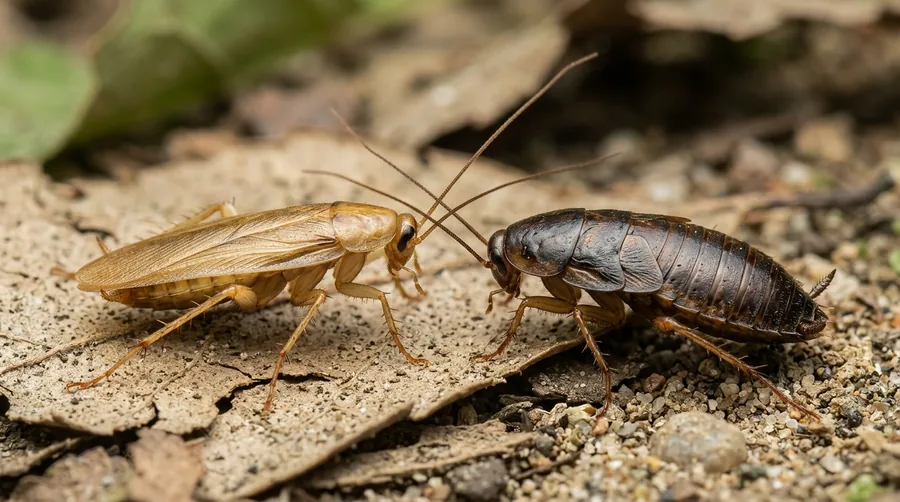
Reddish-brown male Turkestan cockroach with pale wing edges beside a darker female
Recommended Products
See the full ranking →


What it does
Turkestan cockroaches are primarily outdoor, peridomestic roaches that live and breed around the foundation and yard. Males fly and are strongly drawn to lights, while females do not fly. They wander indoors through gaps, especially at night, but usually do not establish large indoor populations the way German roaches do.
Where it lives
They shelter in moist outdoor harborage: water-meter and irrigation boxes, cracks in concrete, leaf litter, mulch, compost, and hollow blocks. Native to a band from the Middle East to Central Asia, they are now widespread in the Southwest and South, partly spread through the online feeder-insect trade.
How it breeds
Females produce reddish egg cases (oothecae) holding around 18-25 eggs and deposit them in sheltered outdoor spots. They breed prolifically in warm weather, and populations can build quickly, displacing oriental cockroaches in some areas. Development from egg to adult takes several months, with overlapping generations in mild climates.
What it eats
They are omnivorous scavengers, feeding on decaying plant matter, organic debris, pet food, and food scraps around the home and yard. Indoors they will scavenge crumbs and residues, but their main food sources are outdoors.
Identification
Males are slender, reddish-brown to yellowish, about 25-30 mm, with pale cream-colored wing edges, and they fly. Females are darker brown-black, stouter, with short wings and cream markings along the pronotum and wing bases, and cannot fly. The two sexes look different enough to seem like separate species.
Signs of an infestation
- Reddish-brown roaches around water-meter boxes and foundations
- Male roaches flying to porch and outdoor lights at night
- Roaches wandering indoors near doors and garages
- Egg cases in outdoor cracks, mulch, and debris
- Roaches sheltering under pots, blocks, and yard clutter
Prevention tips
- Seal gaps around doors, garages, pipes, and the foundation
- Reduce outdoor moisture and fix leaking irrigation and spigots
- Clear leaf litter, mulch buildup, and yard debris near the house
- Switch exterior lights to bulbs less attractive to flying males
- Keep pet food indoors and trash bins tightly closed
Professional solutions
Because the source is outdoors, control focuses on the yard: removing harborage, reducing moisture, and exclusion. A professional can treat outdoor breeding sites (meter boxes, cracks, mulch beds) with EPA-registered baits and residual products and seal entry points. Indoor sightings usually reflect an outdoor population, so treating only inside rarely solves it.
Health & safety
Turkestan cockroaches do not bite. Like other cockroaches, they can mechanically carry bacteria on their bodies from filthy areas to surfaces, and their debris may contribute to allergies, though the risk is lower than with indoor German roaches because they mostly stay outside. Follow labels on any pesticide and call Poison Control at 1-800-222-1222 for exposures.
Relevant Products




Frequently asked questions
Why do the male and female Turkestan cockroaches look so different?
They are strongly sexually dimorphic. Males are slender, reddish-brown with pale cream wing edges and can fly toward lights. Females are darker, stouter, and have short non-functional wings, so they cannot fly. The difference is dramatic enough that people often think they are two species.
Are Turkestan cockroaches a sign my house is dirty?
Not usually. Turkestan cockroaches live and breed outdoors in moist harborage like meter boxes and mulch, then wander inside. A tidy home can still see them near doors and garages. Control focuses on yard harborage, moisture, and sealing entry points rather than indoor cleaning alone.
Do Turkestan cockroaches infest homes like German roaches?
Rarely to the same degree. They are outdoor, peridomestic roaches that stray indoors but usually do not build the large indoor colonies German cockroaches do. Persistent indoor numbers point to a strong outdoor population nearby that needs treatment and exclusion.
Fact-checked by Morgan Vance, Editorial Director (editorial review, not a professional pest-control or medical sign-off). Last reviewed May 24, 2026. We correct anything a reader shows us is wrong — see our corrections policy.