
Pennsylvania Wood Cockroach
Parcoblatta pennsylvanica · also called wood roach, wood cockroach, Pennsylvania wood roach
Quick answer
The Pennsylvania wood cockroach (Parcoblatta pennsylvanica) is a native outdoor roach that lives under bark, logs, and leaf litter. Males fly toward lights and wander indoors in spring, and both sexes hitchhike in on firewood. Unlike German roaches, they do not breed or establish inside and are a harmless nuisance.
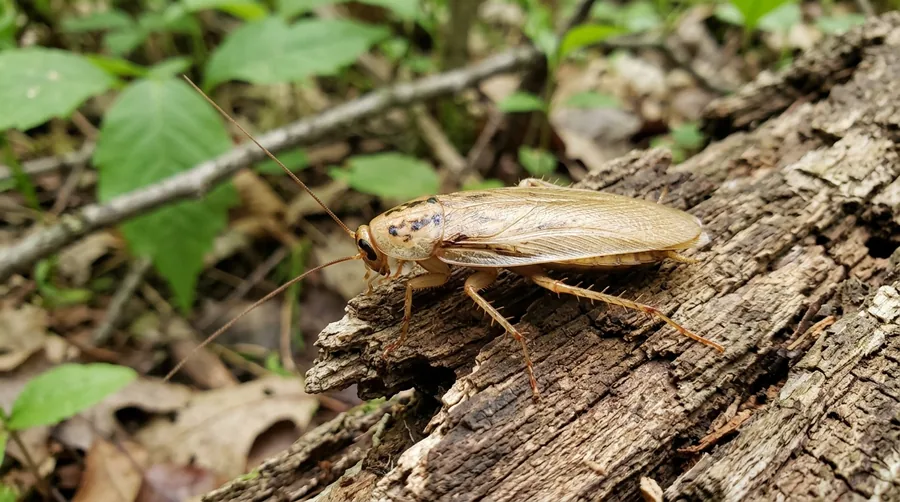
Chestnut-brown Pennsylvania wood cockroach with translucent wing edges on tree bark
Recommended Products


What it does
Wood cockroaches live outdoors in moist wooded areas, sheltering under loose bark, in log piles, and in leaf litter. In late spring, males fly readily and are strongly attracted to lights, which brings them onto porches and occasionally indoors. Both sexes are frequently carried inside on firewood but simply wander once there.
Where it lives
Their natural home is forests, woodpiles, tree holes, and mulchy debris across the eastern and central US. Around houses they gather near woodpiles, under shingles and siding, and in gutters full of leaves. Indoors they do not find suitable breeding conditions and typically die off without establishing.
How it breeds
There is generally one generation, with development spanning a year or more. Females attach egg cases under bark and in debris outdoors. Nymphs develop slowly in the leaf litter. Adult males appear and fly mainly from May into July, which is when indoor sightings peak.
What it eats
Wood cockroaches feed on decaying organic matter, leaf litter, and plant debris outdoors. They are not drawn to stored human food the way indoor roaches are, which is part of why they do not colonize kitchens.
Identification
Adults are chestnut to dark brown, about 20-30 mm, with a pale, translucent stripe along the front edge of the wings and thorax. Males have long wings and fly; females have short wings and cannot fly. They closely resemble American roaches but are slimmer and are seen near wood, not sewers.
Signs of an infestation
- Brown roaches appearing indoors mainly in late spring
- Male roaches flying to porch lights and windows at night
- Roaches found near firewood, woodpiles, and gutters
- Single wandering roaches rather than clustered groups
- No droppings buildup or egg cases indoors
Prevention tips
- Store firewood away from the house and inspect it before bringing it in
- Seal gaps around doors, windows, soffits, and utility penetrations
- Clean leaf litter from gutters and away from the foundation
- Reduce outdoor lighting or use bulbs less attractive to flying males
- Fix damp spots under siding, shingles, and crawl spaces
Professional solutions
Wood cockroaches rarely need professional treatment because they do not breed indoors. Exclusion and reducing outdoor harborage almost always solve it. If numbers are unusually high, a professional may apply an exterior perimeter treatment and help identify entry points, but interior spraying is generally unnecessary for a pest that cannot establish inside.
Health & safety
Pennsylvania wood cockroaches are essentially harmless. They do not bite, do not spread disease indoors, and do not contaminate food the way German or American roaches can, since they are transient outdoor insects. The main concern is the nuisance and alarm of seeing roaches fly in during spring.
Relevant Products



Frequently asked questions
Will wood cockroaches infest my kitchen like German roaches?
No. Pennsylvania wood cockroaches cannot breed or establish indoors and are not attracted to stored food. They wander in from woodpiles and outdoor harborage, especially flying males in spring, then die off. Sealing entry points and moving firewood away from the house solves it.
Why do I see brown roaches only in late spring?
That timing matches the flight of adult male wood cockroaches, which are strongly drawn to lights from about May into July. They fly onto porches and slip indoors but do not stay. Reducing outdoor lighting near doors and sealing gaps cuts down the sightings.
Fact-checked by Morgan Vance, Editorial Director (editorial review, not a professional pest-control or medical sign-off). Last reviewed June 26, 2026. We correct anything a reader shows us is wrong — see our corrections policy.