
Rose Sawfly
Endelomyia aethiops · also called roseslug, rose slug, bristly roseslug
Quick answer
Rose sawflies, whose larvae are known as roseslugs, are caterpillar-like insects that skeletonize rose leaves, leaving a lacy, translucent 'windowpane' surface that browns. Despite the slug nickname, they are the larvae of small non-stinging wasp relatives, not true slugs or moth caterpillars. Damage is mostly cosmetic and appears in late spring and summer.
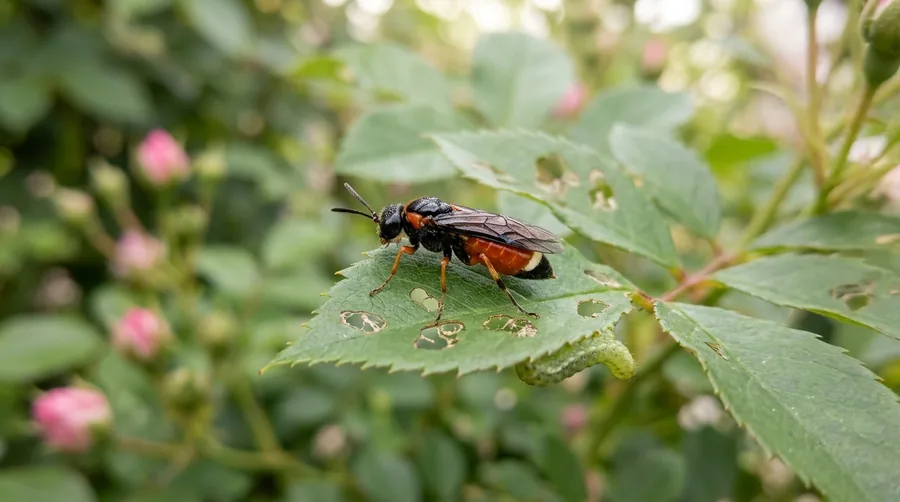
Pale green slug-like rose sawfly larva skeletonizing the surface of a green rose leaf
Recommended Products


What it does
Roseslug larvae feed on the leaf surface, scraping away the soft tissue and leaving the fine network of veins and a thin translucent layer, so leaves develop a lacy, 'windowpane' look before turning brown. They usually feed on the underside of leaves and are easy to overlook. The damage is unsightly but rarely threatens an established rose.
Where it lives
Rose sawflies are found on cultivated and wild roses across the US in home gardens, landscapes, and nurseries. The common roseslug is most active in late spring, while related species such as the bristly roseslug can appear through the summer. They feed wherever roses grow and shelter on the leaves themselves.
How it breeds
Adult sawflies are small, wasp-like insects (not bees or true wasps that sting) that insert eggs into leaf tissue. Larvae feed for several weeks, then drop to pupate in the soil. The common roseslug has a single generation per year in late spring, while bristly and curled roseslugs can produce multiple generations through the season.
What it eats
Rose sawfly larvae feed only on rose foliage, scraping the surface of the leaves. Adults do not feed significantly on the plant. Unlike beetle or caterpillar pests, they are specialists confined to roses.
Identification
Larvae are pale green, up to about 15 mm, and superficially resemble tiny slugs or caterpillars; some species are smooth and shiny while the bristly roseslug is covered in fine hairs. A key distinction from moth caterpillars is the sawfly larva's greater number of fleshy prolegs. The skeletonized, windowpane leaf damage is the clearest sign.
Signs of an infestation
- Lacy, skeletonized 'windowpane' patches on rose leaves
- Translucent leaf tissue that later turns brown and papery
- Pale green slug-like larvae on leaf undersides
- Feeding damage concentrated in late spring or through summer
- Progressive browning of foliage on affected canes
Prevention tips
- Inspect rose leaf undersides regularly in late spring and summer
- Knock larvae off with a strong spray of water
- Handpick or wipe off larvae while numbers are low
- Avoid broad-spectrum insecticides that kill sawfly predators
- Rake and remove debris under roses to disrupt pupae
Professional solutions
Most roseslug problems are handled with a strong water spray, handpicking, or insecticidal soap or horticultural oil on the larvae; note that Bacillus thuringiensis does not work on sawflies because they are not caterpillars. Professional care is rarely needed. Your Cooperative Extension office can confirm sawflies versus caterpillars if control seems to fail.
Health & safety
Rose sawflies are harmless to people and pets. The adults are wasp relatives but do not sting, and the larvae do not bite or carry disease. The impact is limited to the appearance of rose foliage; the skeletonizing damage is cosmetic and established roses generally tolerate it well.
Relevant Products


Frequently asked questions
What is skeletonizing my rose leaves?
Lacy, translucent 'windowpane' patches on rose leaves that later brown are classic roseslug damage, caused by the larvae of rose sawflies. Check the leaf undersides for small pale green slug-like larvae; they scrape the surface tissue rather than chewing all the way through.
Are roseslugs actually slugs?
No. Despite the name, roseslugs are the larvae of rose sawflies, which are small non-stinging relatives of wasps, not true slugs or moth caterpillars. This matters for control, because Bacillus thuringiensis (Bt) works on caterpillars but not on sawfly larvae.
How do I get rid of rose sawflies?
Knock larvae off with a strong water spray, handpick them, or use insecticidal soap or horticultural oil on the leaf undersides where they feed. Avoid broad-spectrum sprays that kill their predators. Because damage is mostly cosmetic, minor infestations can simply be tolerated.
Fact-checked by Morgan Vance, Editorial Director (editorial review, not a professional pest-control or medical sign-off). Last reviewed July 6, 2026. We correct anything a reader shows us is wrong — see our corrections policy.