
Black Vine Weevil
Otiorhynchus sulcatus · also called black vine weevil, taxus weevil
Quick answer
The black vine weevil (Otiorhynchus sulcatus) is a flightless black beetle whose adults notch the leaf edges of rhododendron, azalea, yew, and other ornamentals at night. Its root-feeding grubs are the more serious problem, able to kill container and nursery plants. In the US, all are female and reproduce without mating.
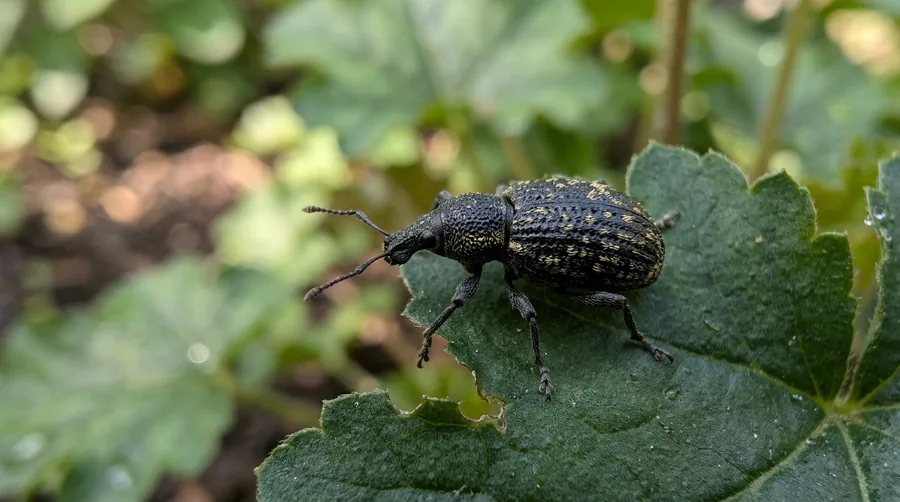
Black pear-shaped black vine weevil with a short snout and flecked back on a rhododendron leaf
Recommended Products


What it does
Adults feed at night, chewing distinctive C-shaped notches along the margins of leaves; by day they hide in mulch, soil, and debris. Adult leaf notching is mostly cosmetic, but the legless grubs feed on roots and can girdle the crown, wilting or killing rhododendrons, azaleas, and especially potted or nursery plants. Flightless adults sometimes wander indoors.
Where it lives
The black vine weevil is common in cooler regions, including the Pacific Northwest, Northeast, and northern states, on broadleaf evergreens and many ornamentals in landscapes, gardens, and nurseries. Grubs live in the root zone and potting media, while adults shelter in mulch and ground litter around host plants.
How it breeds
In the US the black vine weevil is parthenogenetic, so all adults are female and lay eggs without mating. Eggs are laid in the soil in summer; grubs feed on roots through fall, overwinter, and pupate in spring, with new adults emerging in early summer. There is generally one generation per year.
What it eats
Adults chew the leaf margins of rhododendron, azalea, yew, hemlock, euonymus, and many other ornamentals and small fruits. The grubs feed on the roots and crowns of the same plants, favoring container and nursery stock.
Identification
Adults are about 10 mm, dull black, pear-shaped, and flecked with tiny patches of yellowish hairs, with a short broad snout and elbowed antennae; they cannot fly. Grubs are white, legless, C-shaped, and found in the root ball. Nighttime leaf notching plus wilting rhododendrons points strongly to this weevil.
Signs of an infestation
- C-shaped notches chewed along leaf margins, appearing overnight
- Wilting or declining rhododendrons, azaleas, or potted plants
- White, legless, C-shaped grubs in the root zone or potting media
- Dull black flightless weevils in mulch or wandering indoors
- Girdled stems or roots on container and nursery plants
Prevention tips
- Inspect for notched leaves and check root balls of declining plants
- Handpick adults at night when they feed
- Reduce mulch and debris that shelter adults near valued shrubs
- Use sticky barriers on stems or pots to trap climbing adults
- Consider beneficial nematodes in moist soil to attack grubs
Professional solutions
Root-feeding grubs are the harder problem; gardeners can apply beneficial nematodes to moist soil and target adults at night. For repeated ornamental losses or nursery stock, professional help or your Cooperative Extension office can advise on soil-applied products, nematode timing, and confirming the weevil versus other causes of shrub decline.
Health & safety
The black vine weevil is harmless to people and pets; it does not bite, sting, or carry disease, and flightless adults that wander indoors are only a nuisance. Its impact is on plants, where adult leaf notching is cosmetic but root-feeding grubs can seriously damage or kill ornamentals and potted stock.
Relevant Products




Frequently asked questions
What is chewing C-shaped notches in my rhododendron leaves?
Notches chewed along the leaf margins of rhododendron, azalea, or yew, appearing overnight, are typical black vine weevil damage. The dull black, flightless adults feed after dark and hide by day, so scout with a flashlight or check mulch and debris around the plants.
Why is my potted shrub wilting even though I water it?
Wilting or decline in container and nursery plants can be caused by black vine weevil grubs feeding on the roots and crown. Check the root ball for white, legless, C-shaped grubs. This root damage is often more serious than the cosmetic leaf notching the adults cause.
How do I control black vine weevil grubs?
Beneficial nematodes applied to moist soil can attack the grubs, and targeting the flightless adults by handpicking at night reduces egg-laying. Sticky barriers on stems or pots trap climbing adults. For valued or repeatedly damaged plants, professional soil treatments may be warranted.
Fact-checked by Morgan Vance, Editorial Director (editorial review, not a professional pest-control or medical sign-off). Last reviewed June 17, 2026. We correct anything a reader shows us is wrong — see our corrections policy.