
Pepper Weevil
Anthonomus eugenii · also called pepper weevil
Quick answer
The pepper weevil (Anthonomus eugenii) is a tiny dark beetle with a long curved snout that attacks peppers and related nightshades. Adults chew buds and fruit, while grubs develop hidden inside the fruit, causing buds and young peppers to yellow and drop. It is a serious pepper pest in the warm southern and southwestern US.
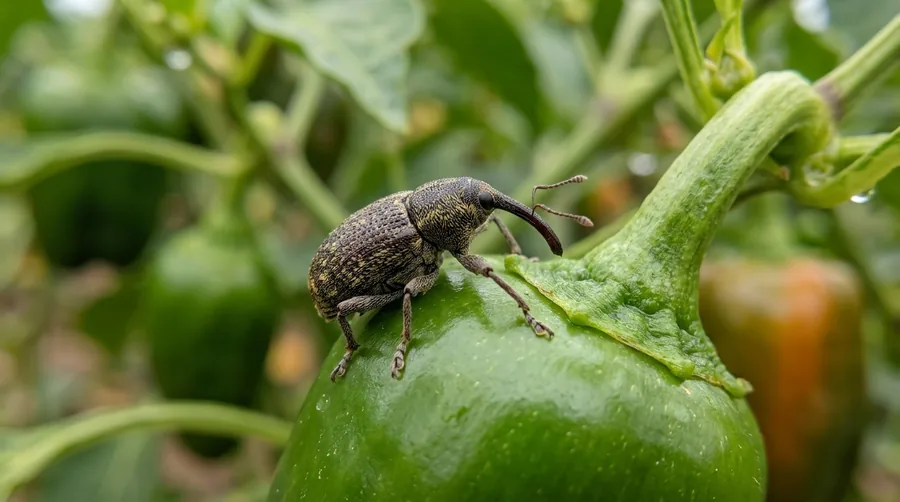
Small dark pepper weevil with a long curved snout on a green pepper fruit
Recommended Products


What it does
Adult weevils feed on pepper buds, blossoms, and fruit with their long snouts, and females lay eggs inside buds and small fruit. The grubs feed hidden within, causing infested buds and young peppers to yellow, and often drop prematurely. Because the larvae develop inside the fruit, damage is concealed until pods fall or are cut open.
Where it lives
The pepper weevil thrives in the warm Southeast, Gulf Coast, south-central, and southwestern US, including Florida, Texas, and southern California, where peppers grow much of the year. It moves among cultivated peppers and wild or volunteer nightshades that let it persist between crops.
How it breeds
Females chew a small hole in a bud or fruit, lay an egg inside, and seal it. The larva feeds within the bud or fruit through three instars and pupates inside before a new adult chews its way out. In warm regions the cycle takes only a few weeks, allowing many overlapping generations year-round.
What it eats
Pepper weevils feed on peppers (all Capsicum types) and some related solanaceous plants, especially nightshade weeds that act as alternate hosts. Adults feed on foliage, buds, and fruit; larvae feed only inside buds and developing fruit.
Identification
Adults are about 3 mm, dark brown to black, dusted with brassy-gray scales, with the long curved snout typical of weevils. The pale, legless, C-shaped grubs are found only inside buds and fruit. Sudden bud and small-fruit drop on peppers is often the first clue before the tiny adults are noticed.
Signs of an infestation
- Buds and small peppers yellowing and dropping prematurely
- Tiny dark long-snouted beetles on pepper plants
- Small egg-laying or feeding punctures on buds and fruit
- Pale C-shaped grubs inside fallen or cut-open peppers
- Misshapen or internally damaged mature fruit
Prevention tips
- Remove and destroy dropped buds and fruit, which harbor larvae
- Pull volunteer peppers and nightshade weeds that host the weevil
- Inspect new transplants and buds for feeding punctures
- Clean up and destroy crop residue promptly after harvest
- Use yellow sticky traps to detect adults early
Professional solutions
Because larvae develop protected inside fruit, sanitation and early detection matter more than rescue sprays. Gardeners should remove infested drops and weedy hosts. For repeated pepper losses or commercial plantings, your Cooperative Extension office can advise on trapping, timing, and adult-targeted insecticide programs suited to your region.
Health & safety
The pepper weevil is harmless to people and pets; it does not bite, sting, or carry human disease. Finding a grub in a pepper is unappetizing but not dangerous. Its impact is confined to the crop, where bud and fruit drop and internal larval damage can sharply cut pepper yield.
Relevant Products


Frequently asked questions
Why are my pepper buds and small peppers falling off?
Premature yellowing and drop of pepper buds and young fruit is a hallmark of the pepper weevil. Females lay eggs inside buds and fruit, and the hidden grubs cause them to drop. Check fallen buds and cut-open peppers for small pale C-shaped grubs.
How do I control pepper weevils?
Sanitation is central: remove and destroy dropped buds and fruit that shelter larvae, pull volunteer peppers and nightshade weeds, and inspect plants and transplants for tiny long-snouted beetles. Yellow sticky traps catch adults early. Sprays help only against adults, not grubs inside fruit.
Are pepper weevils harmful if I eat an affected pepper?
They are not a health hazard. Pepper weevils and their grubs do not carry human disease, so an affected pepper is unappetizing rather than dangerous. Simply discard damaged fruit; the weevil's importance is crop loss, not food safety risk.
Fact-checked by Morgan Vance, Editorial Director (editorial review, not a professional pest-control or medical sign-off). Last reviewed July 25, 2026. We correct anything a reader shows us is wrong — see our corrections policy.