Rat Snake
Pantherophis spp. · also called black rat snake, chicken snake, corn snake
Quick answer
Rat snakes (Pantherophis species) are large, non-venomous constrictors that are excellent climbers and superb rodent hunters. Common in barns, attics, and around farms, they help control mice and rats but sometimes raid poultry nests for eggs and chicks. They are harmless to people and beneficial to keep around.
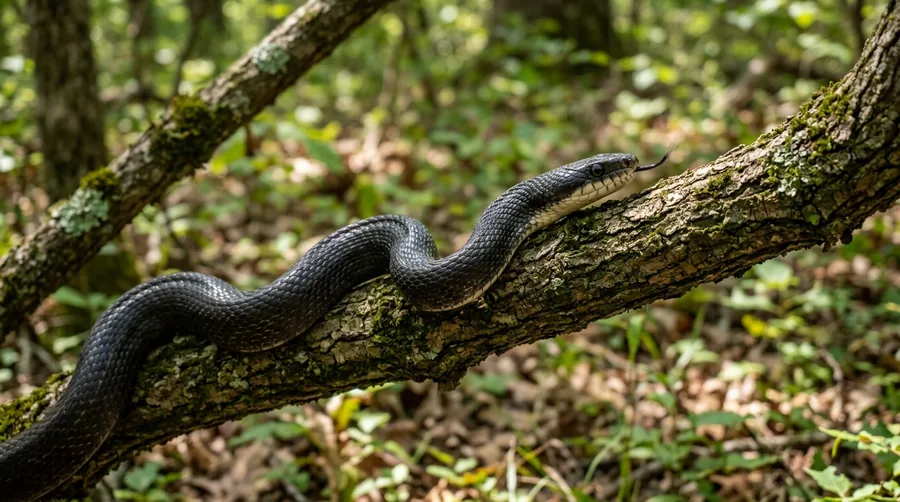
Large dark rat snake climbing a wooden barn beam
Recommended Products


What it does
Rat snakes are agile climbers that hunt by day and night, scaling walls, trees, and rafters in search of rodents, which they kill by constriction. They readily enter barns, sheds, attics, and outbuildings following mice and rats. Their main conflict with people is raiding chicken coops for eggs and young chicks.
Where it lives
Rat snakes are common across the eastern and central US in woodlands, farmland, fencerows, and suburbs. Drawn by rodents, they frequent barns, grain stores, coops, sheds, attics, and wall voids, and their climbing ability lets them reach nests, rafters, and upper floors that ground-dwelling snakes cannot.
How it breeds
Rat snakes mate in spring, and females lay a clutch of about a dozen eggs in summer in a warm, moist spot such as a compost pile, rotting log, or manure. The eggs hatch in late summer, and the young are independent immediately. They typically produce one clutch a year.
What it eats
Rat snakes are constrictors that feed mainly on rodents, especially mice and rats, along with birds, eggs, and occasionally frogs and lizards. Their strong preference for rodents makes them valuable natural pest control, though the same appetite draws them to poultry eggs and chicks.
Identification
Rat snakes are large, usually 3-6 feet, with variable coloring by species: solid black, gray with darker blotches, or orange-and-brown patterns. They are non-venomous, with round pupils and no rattle, and often freeze, climb, or flee. A wildlife professional can confirm a snake's species if you are unsure.
Signs of an infestation
- A large snake climbing walls, beams, or trees
- Missing chicken eggs or chicks from a coop
- Shed snake skins in barns, attics, or sheds
- A snake found in a rafter, wall void, or outbuilding
- Fewer rodents where the snake is active
Prevention tips
- Control rodents to remove the snake's main food source
- Seal gaps and openings into barns, coops, and attics
- Collect eggs promptly and secure the coop with tight mesh
- Store feed in sealed containers to avoid drawing rodents
- Clear clutter and debris that offer snakes shelter
Professional solutions
Because rat snakes are non-venomous and control rodents, the usual approach is tolerance plus exclusion: seal entry points and reduce the rodents that attract them. A snake inside a home or coop can be relocated with a snake hook and container or removed by a wildlife professional. Killing this beneficial species is unnecessary.
Health & safety
Rat snakes are non-venomous and not a danger to people; if cornered they may rattle their tail in leaves, musk, or deliver a harmless bite, but they prefer to flee. As reptiles they can carry Salmonella, so wash your hands if you handle or move one. Their presence usually signals a rodent supply worth addressing. Overall risk is low.
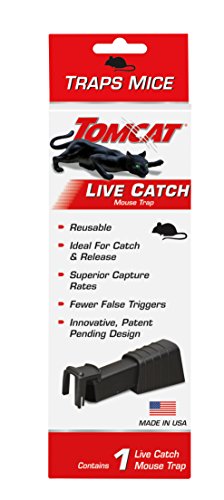
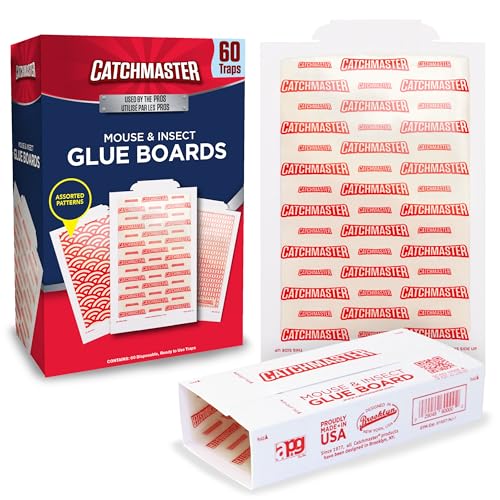
Relevant Products


Frequently asked questions
Are rat snakes venomous or dangerous?
No. Rat snakes are non-venomous constrictors and are harmless to people; they would rather flee or climb than confront you, and at worst give a harmless bite if cornered. They are beneficial rodent hunters, so unless one is in a coop or living space, they are generally best left alone.
How do I keep rat snakes out of my chicken coop?
Rat snakes come for rodents and eggs, so control mice and rats, store feed in sealed containers, and collect eggs promptly. Seal the coop with tight quarter-inch hardware cloth over every gap, since snakes enter small openings. Removing the food draw and closing entry points is far more effective than harming the snake.
Should I kill a rat snake I find on my property?
There is no need. Rat snakes are non-venomous and are among the best natural controllers of mice and rats. If one is in an unwanted spot, it can be relocated with a snake hook and bucket or removed by a wildlife professional, and sealing entry points keeps others out.
Fact-checked by Morgan Vance, Editorial Director (editorial review, not a professional pest-control or medical sign-off). Last reviewed July 12, 2026. We correct anything a reader shows us is wrong — see our corrections policy.