Copperhead
Agkistrodon contortrix · also called eastern copperhead, copperhead snake, highland moccasin
Quick answer
The copperhead (Agkistrodon contortrix) is a venomous pit viper with a coppery head and dark, hourglass-shaped crossbands. Well camouflaged in leaf litter and woodpiles across the eastern and central US, it is a leading cause of venomous snakebites. Bites are painful and need medical care but are rarely fatal.
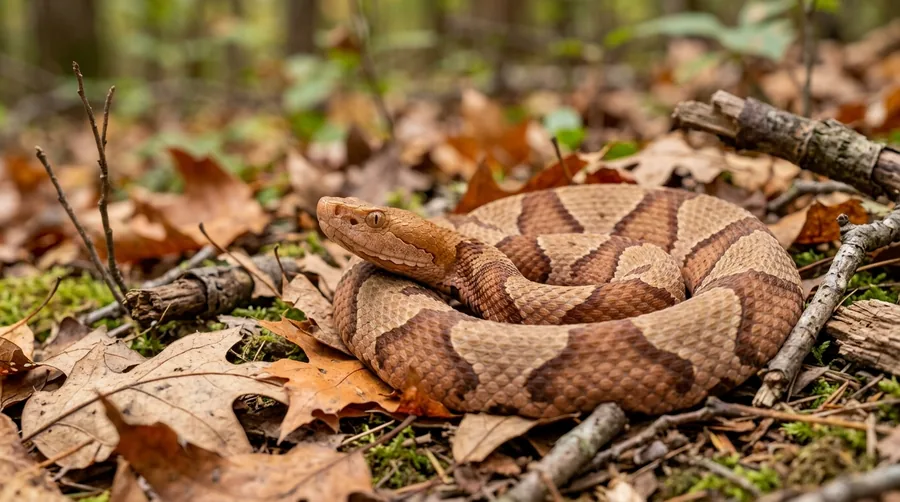
Copper-colored copperhead snake with dark hourglass crossbands coiled in leaf litter
Recommended Products



What it does
Copperheads are ambush predators that lie still, relying on camouflage rather than fleeing, which is why many bites happen when people step on or reach near one without seeing it. They are most active on warm days and evenings and in spring and fall. They are not aggressive, but they will strike defensively if touched or cornered.
Where it lives
Copperheads live across the eastern and central US in forests, rocky hillsides, stream edges, and wooded suburbs. Around homes they shelter in leaf litter, woodpiles, brush, mulch beds, stone walls, and under decks and debris, favoring cover near the ground where they can hide and hunt.
How it breeds
Copperheads mate in spring and sometimes fall, and females give live birth in late summer to a litter of about four to seven young. The newborns are venomous from birth and have a distinctive yellow-green tail tip. They typically reproduce once a year or less, so populations grow slowly.
What it eats
Copperheads eat mainly small rodents such as mice and voles, along with frogs, lizards, small birds, and large insects like cicadas. Because rodents are a primary food, a property with a mouse or rat problem can be more attractive to copperheads.
Identification
Look for a thick-bodied snake 24-36 inches long, tan to coppery, with dark crossbands shaped like an hourglass, wide on the sides and narrow across the back. It has a copper-toned, somewhat triangular head and vertical, cat-like pupils. If you are not certain a snake is harmless, treat it as venomous and keep your distance.
Signs of an infestation
- A coppery, hourglass-banded snake near cover
- Snakes sheltering in woodpiles, mulch, or leaf litter
- Sightings around stone walls, decks, or brush
- Shed skins in low, sheltered harborage
- Rodent activity that draws snakes to a property
Prevention tips
- Clear leaf litter, brush, and debris that provide cover
- Stack firewood off the ground and away from the house
- Control rodents to remove a primary food source
- Seal gaps under decks, sheds, and foundations
- Keep grass short and mulch beds thin near walkways
Professional solutions
Because copperheads are venomous, do not try to catch, move, or kill one, since most bites occur during these attempts. Keep people and pets away and call a licensed snake-removal or wildlife professional to relocate it. Pros can also identify harborage and rodent problems drawing snakes and recommend habitat changes to make the property less inviting.
Health & safety
Copperheads are venomous and are a leading cause of US venomous snakebites; bites are painful and cause swelling and tissue damage but are rarely fatal with prompt care. If bitten, stay calm, keep the limb still and below heart level, remove rings and tight items, and call 911 and Poison Control at 1-800-222-1222 immediately. Do not cut, suck, apply ice, or use a tourniquet. Overall risk is high.
Relevant Products




Frequently asked questions
What should I do if a copperhead bites me?
Treat every copperhead bite as a medical emergency. Stay calm, move away from the snake, keep the bitten limb still and below heart level, and remove rings, watches, and tight clothing before swelling starts. Call 911 and Poison Control at 1-800-222-1222 right away. Do not cut the wound, suck out venom, apply ice, or use a tourniquet.
How do I keep copperheads away from my house?
Remove cover and food. Clear leaf litter, brush, and debris, stack firewood off the ground and away from the house, keep grass short and mulch thin, seal gaps under decks and sheds, and control rodents that copperheads hunt. If you find one, do not approach it; call a professional to relocate it safely.
Are copperhead bites deadly?
Copperhead venom is medically significant, causing pain, swelling, and tissue damage, and bites should always be treated as an emergency, but with prompt medical care fatalities are rare. Most serious outcomes involve delays in treatment or attempts to handle the snake. Never try to catch or kill a copperhead, since that is when most bites occur.
Fact-checked by Morgan Vance, Editorial Director (editorial review, not a professional pest-control or medical sign-off). Last reviewed May 10, 2026. We correct anything a reader shows us is wrong — see our corrections policy.