
Common Garter Snake
Thamnophis sirtalis · also called garter snake, gardener snake, garden snake
Quick answer
The common garter snake (Thamnophis sirtalis) is a slender, harmless snake with long yellow stripes down a dark body. Widespread and non-venomous, it is one of the most beneficial yard snakes, eating slugs, worms, and insects. It rarely bites, poses little danger, and helps control garden pests.
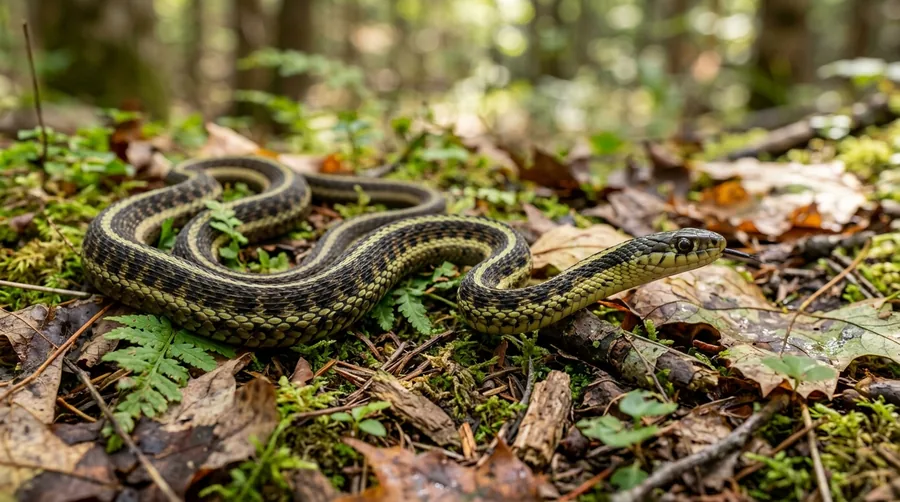
Slender garter snake with yellow stripes running down a dark body in a garden
Recommended Products



What it does
Garter snakes are active by day, especially in mild weather, hunting along garden beds, lawn edges, and damp areas. They are quick to flee and non-aggressive; if grabbed, they may release a harmless, smelly musk or give a minor nip rather than a dangerous bite. In cold months they gather to brumate, sometimes in groups.
Where it lives
One of the most widespread US snakes, the common garter snake lives nationwide in gardens, lawns, meadows, marsh edges, and woodland near moisture. Around homes it shelters under rocks, boards, logs, mulch, debris piles, and low shrubs, and near water and dense ground cover that hold its prey.
How it breeds
Garter snakes mate in spring after emerging from winter shelter. Rather than laying eggs, females give live birth in late summer to a litter that can range widely from a handful to dozens of young, which are independent at birth. They typically produce one litter a year.
What it eats
Garter snakes eat slugs, earthworms, insects, leeches, amphibians, and small fish, along with the occasional small rodent. Their appetite for slugs and other soft-bodied garden pests makes them a genuinely helpful presence in most yards and gardens.
Identification
Look for a slim snake usually 18-26 inches long with a dark background color and three light stripes, one down the back and one along each side, often yellow but sometimes greenish or brown. There is no venom and no rattle; garter snakes are easily distinguished from stout, patterned vipers.
Signs of an infestation
- A thin, striped snake gliding through garden beds
- Snakes basking on warm rocks, paths, or steps
- Shed snake skins under boards, mulch, or debris
- Snakes sheltering beneath rocks, logs, or ground cover
- Reduced slug and insect activity where they hunt
Prevention tips
- Clear brush piles, tall grass, and debris that provide cover
- Store firewood and boards up off the ground
- Seal gaps under doors, sheds, and foundations
- Control rodents and slugs to reduce the food supply
- Trim dense ground cover near the home's foundation
Professional solutions
Garter snakes rarely need control and are best left alone as free pest control, or gently encouraged to move on by reducing cover and prey. If a snake enters a home, it can usually be swept into a container and released outdoors, or a wildlife professional can remove it. There is no need to kill this harmless, beneficial species.
Health & safety
Common garter snakes are non-venomous and pose very little risk; they flee rather than confront and only nip or release musk if handled. Like other reptiles they can carry Salmonella, so wash your hands if you must move one and avoid handling them unnecessarily. There is no reason to fear or kill them. Overall risk is low.
Relevant Products





Frequently asked questions
Are garter snakes dangerous or venomous?
No. Common garter snakes are non-venomous and harmless to people and pets. They almost always flee, and at most give a minor nip or release a smelly musk if you grab them. They are actually beneficial, eating slugs, worms, and insects, so there is no reason to harm them.
How do I keep garter snakes out of my yard?
Reduce what shelters and feeds them: clear brush piles, tall grass, and debris, store firewood off the ground, seal gaps under sheds and doors, and control slugs and rodents. With less cover and prey, garter snakes move elsewhere on their own; killing them is unnecessary for a harmless, helpful species.
What should I do if a garter snake gets in the house?
Stay calm, since it is harmless. Gently guide or sweep it into a bucket or box and release it outside, away from the foundation, or call a wildlife professional if you would rather not handle it. Afterward, seal the gap it used and wash your hands, as reptiles can carry Salmonella.
Fact-checked by Morgan Vance, Editorial Director (editorial review, not a professional pest-control or medical sign-off). Last reviewed May 27, 2026. We correct anything a reader shows us is wrong — see our corrections policy.