Green Peach Aphid
Myzus persicae · also called peach-potato aphid, greenfly, aphid
Quick answer
The green peach aphid (Myzus persicae) is a tiny, soft-bodied pale-green insect that clusters on leaves and stems, sucking plant sap. A major pest of peaches, vegetables, and ornamentals, it stunts plants, coats them in sticky honeydew, and is one of the world's most important carriers of plant viruses.
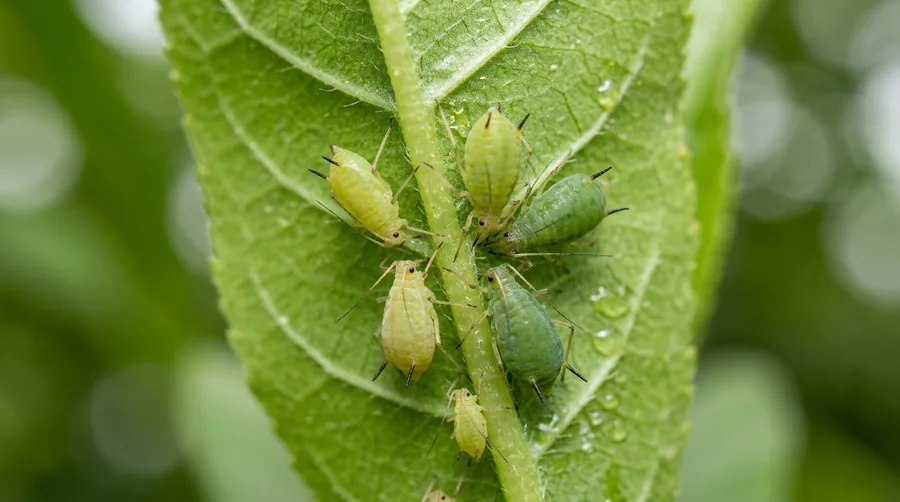
Cluster of tiny pale green aphids on the underside of a plant leaf
Recommended Products


What it does
Green peach aphids gather in dense colonies, mostly on the undersides of leaves and on tender new growth, piercing the plant with needle-like mouthparts to drink sap. Heavy feeding stunts and distorts plants and yellows leaves. As they feed they excrete sticky honeydew that coats foliage and grows black sooty mold, and they spread numerous plant viruses.
Where it lives
This aphid occurs nationwide in gardens, farm fields, orchards, and greenhouses. Outdoors, peach and other stone-fruit trees serve as the primary early-season host, and the aphids then move to a huge range of secondary hosts, including many vegetables, ornamentals, and weeds. Greenhouses let them stay active year-round.
How it breeds
Green peach aphids reproduce explosively. In warm conditions, females reproduce asexually and give live birth to many young without mating, so colonies can double in days and complete many overlapping generations a season. In cold-winter areas they lay overwintering eggs on peach trees; in mild climates they breed continuously.
What it eats
Green peach aphids feed only on plant sap, which they draw from the leaves and stems of peaches, potatoes, peppers, tomatoes, brassicas, spinach, and hundreds of other vegetables, field crops, and ornamentals. They do not feed on people, animals, or structures.
Identification
Look for tiny, pear-shaped, soft-bodied insects about 1.5-2.5 mm long, usually pale to yellow-green but sometimes pink, clustered on leaf undersides and new shoots. Like other aphids they have two tube-like cornicles projecting from the rear of the body. Winged forms appear when colonies get crowded.
Signs of an infestation
- Clusters of small soft insects under leaves and on shoots
- Curled, yellowed, or distorted new growth
- Sticky honeydew making leaves and surfaces shiny
- Black sooty mold growing on the honeydew
- White cast skins shed by the aphids on foliage
Prevention tips
- Inspect new plants and tender growth regularly for colonies
- Encourage lady beetles, lacewings, and parasitic wasps
- Spray sturdy plants with a strong jet of water to dislodge aphids
- Avoid over-fertilizing with nitrogen, which fuels soft growth
- Remove heavily infested leaves and control host weeds
Professional solutions
Most aphid problems are managed by gardeners and growers with cultural controls, beneficial insects, and targeted treatments such as insecticidal soap, horticultural oil, or neem, applied to leaf undersides. Always follow the product's EPA-registered label. For crop or greenhouse infestations, a farm advisor or licensed applicator can guide a resistance-aware program, since this aphid resists many insecticides.
Health & safety
Green peach aphids do not bite, sting, or transmit disease to people or pets, so there is no direct human health risk. Their significance is agricultural: they are one of the most important vectors of plant viruses, and their feeding and honeydew damage crops and ornamentals. If you use a pesticide, follow the label, and for any accidental exposure call Poison Control at 1-800-222-1222. Overall risk to people is low.
Relevant Products


Frequently asked questions
What is the fastest way to get rid of aphids on my plants?
For a light infestation, knock aphids off sturdy plants with a strong jet of water and remove heavily infested leaves. For more, treat leaf undersides with insecticidal soap, horticultural oil, or neem per the label, and encourage lady beetles and lacewings. Because they breed fast, repeat treatments and regular scouting are key.
Are green peach aphids harmful to people?
No. Green peach aphids do not bite, sting, or spread disease to people or pets. They are strictly a plant pest. Their real damage is to crops and gardens, through sap feeding, sticky honeydew and sooty mold, and their role as a major carrier of plant viruses that can devastate vegetables and ornamentals.
Why do my aphids keep coming back after I spray?
Green peach aphids reproduce extremely fast, giving live birth without mating and completing many generations a season, and they have developed resistance to many insecticides. Relying on one spray rarely works. Combining cultural controls, beneficial insects, and rotated, label-directed treatments, with repeated scouting, gives far more durable results.
Fact-checked by Morgan Vance, Editorial Director (editorial review, not a professional pest-control or medical sign-off). Last reviewed July 6, 2026. We correct anything a reader shows us is wrong — see our corrections policy.