
Mole Cricket
Neoscapteriscus spp. · also called mole crickets, tawny mole cricket, southern mole cricket
Quick answer
Mole crickets (Neoscapteriscus species) are brown, inch-long insects with shovel-like front legs built for digging. They tunnel through soil like tiny moles, feeding on grass roots and severing seedlings. A major pest of Southeastern lawns, pastures, and turf, they loosen soil and cause brown, spongy patches.
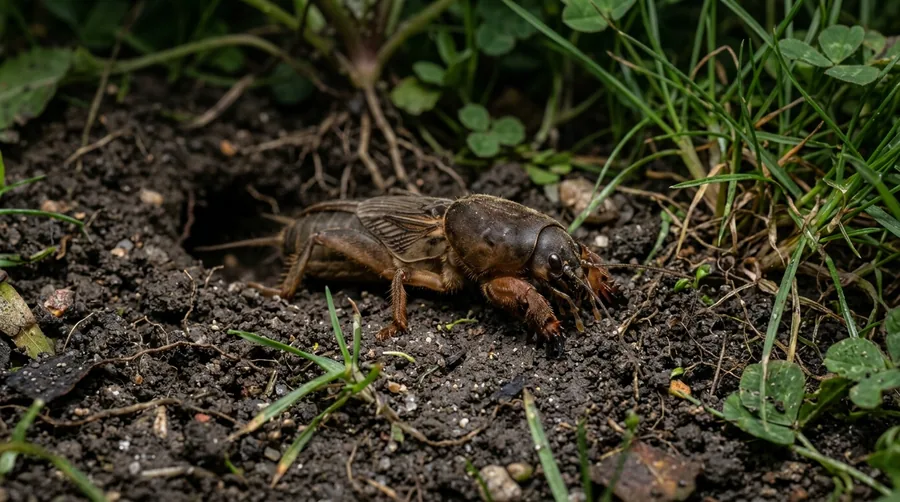
Brown mole cricket with shovel-like front legs on sandy soil
Recommended Products


What it does
Mole crickets spend most of their lives underground, using shovel-like front legs to tunnel just below the surface much like a mole. They feed on grass roots and push up soil, and some species also sever young plants. Adults fly at night, are drawn to lights, and are strong burrowers that damage turf and pasture.
Where it lives
They live in moist, sandy or loamy soil in lawns, golf courses, sod farms, pastures, and vegetable fields, concentrated in the Southeastern and Gulf Coast states. They tunnel in the root zone and are most damaging where turfgrass and warm, sandy soils meet, surfacing at night and after rain or irrigation.
How it breeds
Adults mate in spring, and females lay eggs in underground chambers. Nymphs hatch in early summer and feed and tunnel through the warm months, maturing over the season, generally one generation a year in most of their range. Damage often peaks in late summer as large nymphs feed heavily on roots.
What it eats
Mole crickets feed on the roots and tender shoots of grasses and, depending on species, on other plants and small soil organisms such as earthworms and insects. Their root feeding and constant tunneling both damage turf, loosening soil and cutting off grass from water and nutrients.
Identification
Adults are about 1 to 1-1/2 inches, light to grayish brown, with a velvety body, small eyes, short wings, and unmistakable enlarged, clawed front legs shaped like a mole's paws for digging. Nymphs look similar but smaller and wingless. The digging forelegs are the key identifying feature.
Signs of an infestation
- Raised soil tunnels and loosened, spongy patches of lawn
- Irregular brown, dying areas of turf that lift up easily
- Small mounds of pushed-up soil, especially after rain
- Nighttime chirring calls and adults flying to lights in spring
Prevention tips
- Avoid overwatering, since moist soil attracts egg-laying and tunneling
- Monitor in spring for adult flights and in early summer for young nymphs
- Keep turf healthy and well-rooted to tolerate some feeding
- Use a soap-flush test to detect nymphs before damage spreads
- Reduce attractive lighting near vulnerable turf areas
Professional solutions
Serious mole cricket damage to lawns, sports turf, or pasture is best handled by a lawn-care or pest professional, who can time EPA-registered baits or soil insecticides to target young nymphs in early summer, when control works best. DIY timing is difficult, so professional monitoring and treatment give the most reliable results.
Health & safety
Mole crickets pose no health risk to people or pets. They do not bite, sting, or transmit disease. The concern is entirely economic and property-related: their tunneling and root feeding damage lawns, turf, and crops, which can be costly to repair, but they are harmless to humans.
Relevant Products


Frequently asked questions
What is making raised tunnels in my lawn?
If your lawn has spongy, raised tunnels and loose, dying turf in the Southeast or Gulf Coast, mole crickets are a likely cause. They tunnel through the root zone with mole-like front legs, cutting grass off from water and nutrients and pushing up soil.
Do mole crickets bite or harm people?
No. Mole crickets do not bite, sting, or spread disease, and they are harmless to people and pets. Their damage is limited to lawns, turf, and crops through tunneling and root feeding, which is an economic and landscaping problem, not a health one.
When is the best time to control mole crickets?
Early summer, when eggs have hatched and nymphs are small, is the most effective window, before the larger nymphs cause heavy root damage. A soap flush helps confirm activity. Because timing is tricky, many people rely on a lawn or pest professional.
Fact-checked by Morgan Vance, Editorial Director (editorial review, not a professional pest-control or medical sign-off). Last reviewed June 17, 2026. We correct anything a reader shows us is wrong — see our corrections policy.