House Cricket
Acheta domesticus · also called house crickets, common cricket, gray cricket
Quick answer
The house cricket (Acheta domesticus) is a light yellowish-brown cricket about 3/4 inch long, known for the loud chirping of males on warm nights. It shelters in warm, dark spots indoors and around trash, feeds on almost anything, and is a noisy nuisance that can nibble fabrics and paper.
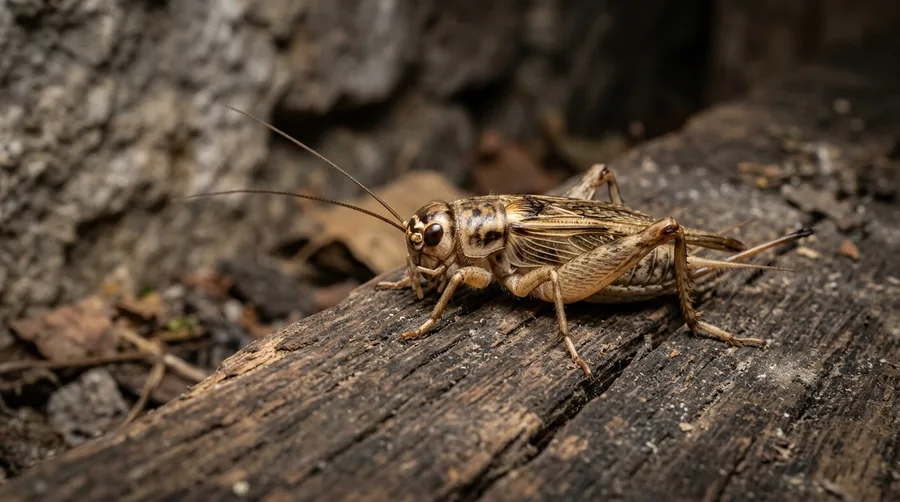
Light yellowish-brown house cricket with long antennae on a concrete basement floor
Recommended Products
See the full ranking →


What it does
House crickets are active at night, when males rub their wings together to produce the loud, rhythmic chirp that carries through a home. They hide by day in warm, dark cracks and are drawn to warmth, moisture, and light. Indoors they can nibble fabrics and paper, and the chirping is a common complaint.
Where it lives
Outdoors they gather around trash, dumpsters, woodpiles, and under debris. As nights cool in late summer and fall they move indoors and into heated spaces like basements, kitchens, utility rooms, and behind appliances, seeking warmth. They are found across the US and were long reared as reptile and fishing bait.
How it breeds
Females lay eggs in damp substrate or, indoors, in crevices. Nymphs hatch and mature through several molts over two to three months, resembling wingless adults. Outdoors there is typically one generation a year, with eggs overwintering, but in warm buildings house crickets can breed year-round.
What it eats
House crickets are omnivorous and eat almost anything: plant matter, other insects (living or dead), and food scraps. Indoors they may chew on fabrics such as cotton, wool, and silk, as well as paper and cardboard, especially items soiled with food or sweat.
Identification
Adults are about 3/4 inch (16-22 mm), light yellowish-brown to gray, with three darker bands across the head and long, thread-like antennae longer than the body. They have large jumping hind legs and wings laid flat over the back. Only males chirp.
Signs of an infestation
- Persistent chirping from warm, hidden areas at night
- Crickets seen hopping in basements, garages, or kitchens
- Small holes or surface chewing on fabrics and paper
- Droppings resembling tiny dark specks near hiding spots
Prevention tips
- Seal cracks and gaps around doors, windows, pipes, and the foundation
- Reduce outdoor lighting or switch to less attractive yellow bulbs
- Move woodpiles, trash, and debris away from the house
- Lower indoor humidity and fix damp basement or utility areas
- Vacuum up strays and use glue boards to monitor entry points
Professional solutions
Most house cricket problems are handled with sealing, moisture control, and glue-board trapping. If crickets enter in large numbers each fall, a professional can treat entry points and the exterior perimeter with EPA-registered products and identify why they are drawn to the structure. Heavy or recurring invasions are the usual reason to call a pro.
Health & safety
House crickets do not spread disease and pose little health risk; they rarely bite, and any nip is harmless. The main issues are the noise of chirping, minor damage to fabrics and paper, and, in very large numbers, an unpleasant odor. Overall they are a low-risk nuisance pest.
Relevant Products




Frequently asked questions
Why is a cricket chirping in my house at night?
Only male house crickets chirp, rubbing their wings together to attract mates, and they are most active in the warm, dark hours of night. The sound usually comes from a warm hidden spot like a basement, utility room, or gap behind an appliance.
Do house crickets cause any damage?
They can. Indoors, house crickets sometimes chew on cotton, wool, silk, paper, and cardboard, leaving small holes or roughened surfaces. They do not spread disease or damage the structure, so the harm is mostly cosmetic plus the noise.
How do I stop crickets from coming inside?
Seal cracks around doors, windows, and the foundation, reduce bright outdoor lighting that attracts them, and move woodpiles and trash away from the house. Lowering indoor dampness and using glue boards near entry points helps catch strays.
Fact-checked by Morgan Vance, Editorial Director (editorial review, not a professional pest-control or medical sign-off). Last reviewed July 8, 2026. We correct anything a reader shows us is wrong — see our corrections policy.