
Camel Cricket
Ceuthophilus spp. · also called cave cricket, spider cricket, camelback cricket
Quick answer
Camel crickets (Ceuthophilus species) are humpbacked, wingless crickets with long legs and antennae that jump when startled. Often called cave or spider crickets, they are silent, do not chirp, and love damp basements, crawl spaces, and garages. They are harmless nuisances but can chew fabrics and cluster in large numbers.
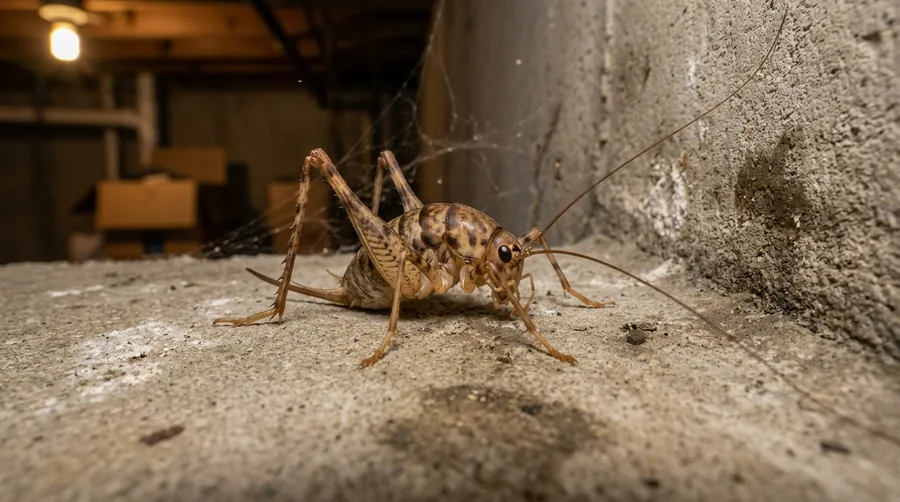
Humpbacked, wingless camel cricket with long legs on a damp basement wall
Recommended Products
See the full ranking →


What it does
Camel crickets, also called cave or spider crickets, are wingless and silent, so they never chirp. Humpbacked with very long legs and antennae, they jump erratically toward whatever startles them, which can be alarming though they are harmless. They are drawn to dark, damp spaces and can gather in large numbers.
Where it lives
They favor cool, humid, dark places: basements, crawl spaces, garages, utility rooms, wells, and under decks, logs, and stones outdoors. They often move indoors during hot, dry spells or cold weather in search of moisture. The invasive greenhouse camel cricket has become common in homes across the eastern US.
How it breeds
Females lay eggs in damp soil in late winter and spring, and nymphs hatch and mature through the warmer months, molting several times. They generally produce one generation a year and can overwinter as nymphs or adults in sheltered, humid spots, so they may be seen year-round in heated basements.
What it eats
Camel crickets are scavengers that eat fungi, plant matter, and organic debris. Indoors, when other food is scarce, they may chew on fabrics, cardboard, and paper, and they will feed on dead insects, making them opportunistic cleanup feeders in damp spaces.
Identification
Adults are roughly 1/2 to 1-1/4 inch, tan to dark brown, often mottled, with a distinctly humped back, no wings, and long, spider-like legs and antennae. Their large hind legs make them strong jumpers. The wingless, silent, hunched look separates them from house and field crickets.
Signs of an infestation
- Humpbacked, wingless crickets jumping in basements or crawl spaces
- Large clusters in dark, damp corners and along foundation walls
- Chewed spots on stored fabrics, cardboard, or paper
- Sightings increasing during hot, dry, or cold weather
Prevention tips
- Reduce humidity in basements and crawl spaces with a dehumidifier
- Seal foundation cracks, vents, and gaps around pipes and doors
- Remove clutter, cardboard, and debris that hold moisture
- Move woodpiles, leaves, and stones away from the foundation
- Use glue boards along walls to monitor and reduce numbers
Professional solutions
Camel crickets usually respond to moisture control, sealing, and glue-board trapping without chemical treatment. For heavy, recurring infestations, a professional can treat entry points and the perimeter and, importantly, help correct the crawl-space or basement dampness that attracts them. Persistent large numbers are the main reason to call a pro.
Health & safety
Camel crickets are harmless to people. They have no venom, do not bite in any meaningful way, and spread no disease. Because they jump toward disturbances, they startle people, but the only real drawbacks are the nuisance of large numbers and occasional chewing damage to fabrics and paper in storage.
Relevant Products




Frequently asked questions
Are camel crickets dangerous or do they bite?
No. Camel crickets have no fangs or venom and do not meaningfully bite people or pets, and they spread no disease. They startle people by jumping toward them when disturbed, but they are completely harmless, wingless, and silent nuisance insects.
Why do camel crickets get into basements?
They are moisture-lovers drawn to cool, dark, humid spaces, so basements, crawl spaces, and garages are ideal. They often move indoors during very hot, dry, or cold weather. Lowering humidity with a dehumidifier is the most effective way to discourage them.
What is the difference between a camel cricket and a spider?
Camel crickets are sometimes called spider crickets because of their long legs and hunched shape, but they are insects with six legs, long antennae, and powerful jumping hind legs, not eight-legged spiders. They do not spin webs or bite.
Fact-checked by Morgan Vance, Editorial Director (editorial review, not a professional pest-control or medical sign-off). Last reviewed May 11, 2026. We correct anything a reader shows us is wrong — see our corrections policy.