
Leaffooted Bug
Leptoglossus spp. · also called leaf-footed bug, leaffooted bugs
Quick answer
Leaffooted bugs (Leptoglossus species) are large brown true bugs named for the flattened, leaf-like flares on their hind legs. They pierce fruits, nuts, and seeds, damaging tomatoes, pomegranates, citrus, and nuts, and may gather to overwinter near or in homes. A nuisance rather than a health threat, they do not meaningfully bite people.
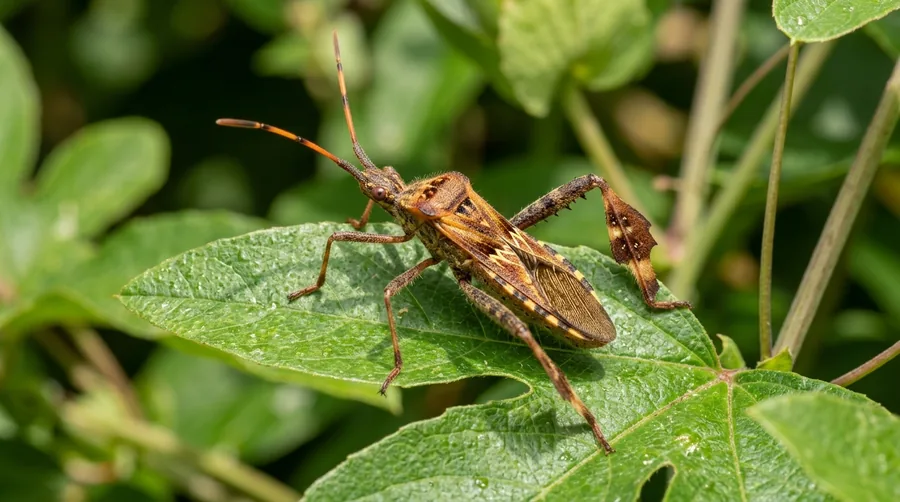
Brown leaffooted bug with flattened leaf-like hind legs feeding on a ripening tomato
Recommended Products


What it does
Leaffooted bugs use needle-like mouthparts to pierce fruits, seeds, and nuts and suck out the contents, causing dimples, discoloration, hard spots, and dropped or misshapen fruit. Adults are strong fliers, cluster in groups, and give off an odor when handled. In fall they seek sheltered overwintering sites and can gather on or enter homes like stink bugs.
Where it lives
They feed on a wide range of plants: tomatoes, pomegranates, citrus, almonds, pistachios, ornamentals, and many weeds, in gardens, orchards, and farms. Most common in the warmer southern, south-central, and western US, adults overwinter in sheltered spots such as woodpiles, outbuildings, and around house eaves and walls.
How it breeds
There are one to three generations a year depending on region. Overwintered adults become active in spring and lay rows of eggs on stems and leaves. Nymphs, often reddish or orange, feed in groups and mature through several stages over the summer. New adults feed into fall, then seek shelter to overwinter.
What it eats
Leaffooted bugs feed only on plant material, favoring developing fruits, seeds, and nuts, and also feeding on stems and leaves. They do not feed on blood, people, animals, or stored household food, though they may wander indoors while overwintering.
Identification
Adults are large (about 3/4 inch), narrow, and brown to gray-brown, with a distinctive flat, leaf-like widening on the hind legs and often a pale zigzag band across the back. Nymphs are smaller, reddish to orange, and lack the full leaf-legs. Their size and leaf-shaped legs set them apart from stink bugs.
Signs of an infestation
- Large brown bugs with leaf-like hind legs on fruit and stems
- Dimpled, discolored, or hard-spotted fruit and nuts
- Rows of bronze, barrel-shaped eggs on stems and leaves
- Groups of reddish nymphs on developing fruit
- Adults clustering on sunny house walls or entering in fall
Prevention tips
- Hand-pick adults and nymphs into soapy water in the garden
- Remove weeds and debris that shelter and feed them
- Seal exterior cracks, gaps, and screens to keep overwintering adults out
- Use row covers on susceptible crops before bugs arrive
- Clean up drops and remove overwintering sites like woodpiles near the house
Professional solutions
In gardens, hand-picking and sanitation usually keep leaffooted bugs in check, so a professional is rarely needed. For orchards or heavy crop damage, labeled insecticides timed to nymphs are more effective than treating tough adults. For repeated fall home invasions, a pest professional can help seal entry points.
Health & safety
Leaffooted bugs are not dangerous to people or pets: they do not seek to bite, do not sting, and carry no human disease. Handled roughly, they may release a mild odor or give a harmless defensive poke, and indoors they are only a nuisance. The real damage is to fruit and nut crops.
Relevant Products


Frequently asked questions
What is the brown bug with leaf-shaped legs on my tomatoes?
A large brown true bug with flat, leaf-like flares on its hind legs feeding on tomatoes or pomegranates is a leaffooted bug. It pierces fruit to feed, causing dimples and discoloration. Its size and leaf-legs distinguish it from the rounder stink bug.
Do leaffooted bugs bite or harm people?
Not meaningfully. They do not seek to bite and cannot sting, and they carry no human disease. If handled roughly they may give a harmless defensive poke or release a mild odor. Their real damage is to garden fruit and nut crops, not to people.
Why are leaffooted bugs coming into my house?
In fall, adults look for sheltered places to overwinter and, like stink bugs, may cluster on sunny walls and slip inside through cracks and gaps. Sealing exterior openings, repairing screens, and removing woodpiles near the house reduce these unwanted indoor visitors.
Fact-checked by Morgan Vance, Editorial Director (editorial review, not a professional pest-control or medical sign-off). Last reviewed July 6, 2026. We correct anything a reader shows us is wrong — see our corrections policy.