
Jerusalem Cricket
Stenopelmatus spp. · also called potato bug, nino de la tierra, old bald-headed man
Quick answer
The Jerusalem cricket (Stenopelmatus species), or potato bug, is a large, flightless, amber-brown insect with a bulbous humanlike head and strong jaws. Native to the western US, it burrows in soil and feeds on roots and other insects. It is not venomous, but can deliver a firm, harmless bite if handled.
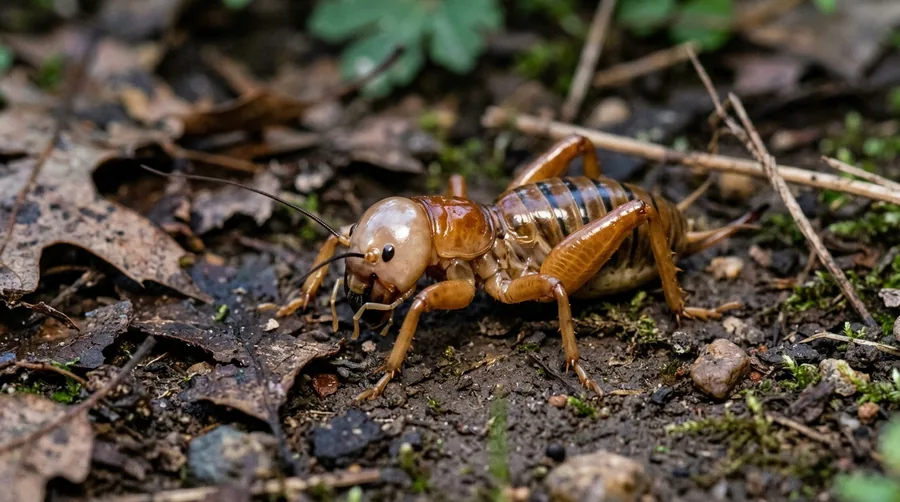
Large amber-brown Jerusalem cricket with a bulbous head and black-banded abdomen on soil
Recommended Products


What it does
Jerusalem crickets are nocturnal burrowers that spend most of their lives underground, digging with powerful legs and surfacing at night or after rain. They are flightless and slow, and when threatened they may hiss by rubbing their legs, kick, emit a foul odor, or bite defensively. They are solitary rather than colony insects.
Where it lives
They live in loose, moist soil in gardens, fields, deserts, and woodlands throughout the western US. Around homes they turn up under logs, rocks, mulch, and flowerpots, and occasionally wander into garages or basements at ground level. They do not infest or breed inside buildings.
How it breeds
Development is slow, often taking a year or more from egg to adult. Females lay eggs in the soil, and nymphs resemble smaller adults, molting several times as they grow underground. Adults are most often seen in cooler, wetter months. Populations are naturally low, not explosive.
What it eats
They feed on plant roots, tubers (which is why they visit potato patches), decaying organic matter, and other insects. They are omnivorous soil dwellers rather than crop-destroying pests, and their garden impact is usually minor.
Identification
Adults are large, 30-50 mm, heavy-bodied, and amber-brown with a distinctive shiny, rounded 'humanlike' head, dark bands across a plump abdomen, and thick digging legs. They are wingless. Their size, bald-looking head, and slow ground-dwelling habits make them hard to confuse with true crickets.
Signs of an infestation
- A large brown insect found in soil, mulch, or under rocks
- Wandering into a ground-floor garage or basement at night
- Shallow burrows and disturbed soil in garden beds
- A hissing sound or foul odor when the insect is disturbed
- Sightings after rain or irrigation in cooler months
Prevention tips
- Seal gaps under doors and around ground-level foundations
- Move mulch, logs, rocks, and flowerpots away from the house
- Reduce excess moisture and overwatering near the foundation
- Remove yard debris that provides daytime shelter
- Relocate any that wander indoors back outside rather than killing them
Professional solutions
Jerusalem crickets rarely warrant professional treatment. They are occasional solitary invaders, easily removed by hand (with gloves) or a container and released outdoors. If they enter frequently, exclusion and reducing moisture and harborage around the foundation solve it. Broadcast insecticide is unnecessary for such an infrequent, beneficial-leaning soil insect.
Health & safety
Despite their alarming look and folklore, Jerusalem crickets are not venomous and are not deadly. They can deliver a firm, painful pinch with their strong jaws if picked up, and may release a foul smell, but the bite is defensive and not medically dangerous. They carry no disease. Handle with gloves or simply guide them outside.
Relevant Products




Frequently asked questions
Are Jerusalem crickets (potato bugs) poisonous or venomous?
No. Jerusalem crickets are not venomous or poisonous, and folklore that they are deadly is false. They can give a firm, harmless pinch with their strong jaws if handled and may emit a foul odor, but the bite is purely defensive and carries no venom or disease.
How did a Jerusalem cricket get in my house?
They are ground-dwelling soil insects that occasionally wander into garages and ground-floor rooms at night, especially after rain or irrigation. They cannot breed indoors. Sealing gaps under doors and moving mulch, rocks, and pots away from the foundation keeps them out.
Fact-checked by Morgan Vance, Editorial Director (editorial review, not a professional pest-control or medical sign-off). Last reviewed May 15, 2026. We correct anything a reader shows us is wrong — see our corrections policy.