Flying Squirrel
Glaucomys spp. · also called flying squirrels, southern flying squirrel, northern flying squirrel
Quick answer
Flying squirrels (Glaucomys species) are small, nocturnal squirrels with soft gray-brown fur, huge dark eyes, and a loose skin flap that lets them glide. They nest in colonies in attics and walls, active at night. Rarely seen, they chew wiring and insulation and are best removed by a professional.
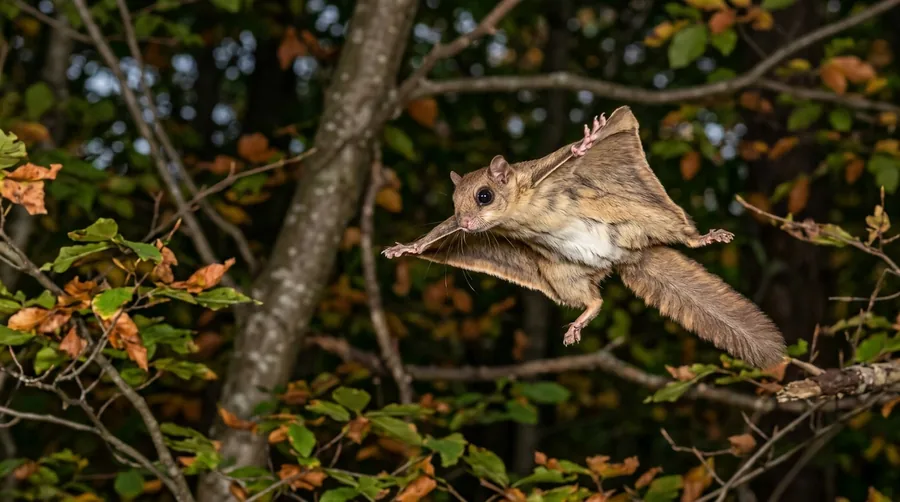
Small gray-brown flying squirrel with large dark eyes and skin flap on a tree trunk at night
Recommended Products


What it does
Flying squirrels are small, nocturnal, and social, gliding between trees on a furred skin flap rather than truly flying. Rarely seen because they are active at night, they nest in colonies and readily move into attics and wall voids, sometimes in surprising numbers. Indoors they gnaw wiring and insulation and leave droppings, though they are shy and seldom bite.
Where it lives
They live in mature woodlands and wooded suburbs across the eastern US, with the northern species farther north and in the Pacific Northwest. They nest in tree cavities and, near homes, in attics, soffits, and wall voids, especially in winter when they huddle in colonies for warmth, which is when homeowners most often notice them.
How it breeds
Flying squirrels usually breed once or twice a year, in late winter and sometimes summer, with litters of about two to four young raised in a tree cavity or attic nest. Young are cared for in the nest for about two months before becoming independent. Colonies may share a nest site, so several may occupy an attic at once.
What it eats
Flying squirrels eat nuts, seeds, acorns, fruit, fungi, tree sap, and lichens, and, more than other squirrels, insects, eggs, and other animal matter. They cache food for winter and will visit bird feeders at night, which can draw them toward houses.
Identification
Flying squirrels are small, about 5-6 inches in the body, with soft gray-brown fur, a whitish belly, very large dark eyes for night vision, a flattened tail, and a loose fold of skin between the front and hind legs that stretches into a gliding surface. The big eyes and skin flap are unmistakable.
Signs of an infestation
- Nighttime scratching, rustling, or soft thumps in the attic or walls
- Small entry gnaw holes at the roofline, soffits, or gable vents
- Accumulations of droppings and cached nuts in the attic
- Chewed wiring and insulation in nesting areas
- Gliding animals seen at dusk near feeders or the roofline
Prevention tips
- Trim branches back from the roof and reduce overhead travel routes
- Seal roofline, soffit, and gable-vent gaps with metal screening
- Cap chimneys and repair damaged fascia and vent covers
- Move bird feeders away from the house, especially for night feeding
- Inspect the attic and eaves for small entry points before winter
Professional solutions
Because flying squirrels are nocturnal and often colonial, an attic infestation usually means several animals and requires a wildlife professional for effective, humane removal. Pros use one-way exclusion doors and seal the many small gaps these squirrels use, and can time work around nesting young. Some states protect flying squirrels, so lawful, professional handling is recommended.
Health & safety
Flying squirrels are shy and rarely bite, and they are not major disease threats to people, though they can host fleas and mites and have historically been linked, uncommonly, to a form of typhus, and their droppings can accumulate in attics. Handle any nest material with gloves and care. The main practical risks are gnawed wiring and attic contamination.
Relevant Products


Frequently asked questions
How do I know if I have flying squirrels instead of mice or rats?
Flying squirrels are active at night, so you hear scratching after dark, but their sounds are heavier than mice, and you may find cached nuts and larger droppings. Seeing a small, big-eyed squirrel with a skin flap glide near the roofline at dusk confirms them.
Are flying squirrels dangerous?
They are shy and rarely bite, and they are not major disease carriers, though they can host fleas and mites and their droppings accumulate in attics. The bigger concern is gnawed wiring, a fire risk, and attic contamination, so proper removal and cleanup matter.
Why are there several flying squirrels in my attic?
Flying squirrels are colonial and huddle together, especially in winter for warmth, so an attic infestation often involves several animals sharing one nest site. Because of that and their protected status in some states, a wildlife professional is the best way to remove them humanely.
Fact-checked by Morgan Vance, Editorial Director (editorial review, not a professional pest-control or medical sign-off). Last reviewed July 29, 2026. We correct anything a reader shows us is wrong — see our corrections policy.