Cross Striped Cabbageworm
Evergestis rimosalis · also called cross-striped cabbageworm, cross-striped cabbage worm
Quick answer
The cross-striped cabbageworm (Evergestis rimosalis) is a caterpillar of cole crops, bluish-gray on top with many black cross-stripes and a yellow line along each side. Larvae feed in groups on cabbage, broccoli, and kale, riddling leaves and boring into heads. Because eggs are laid in clusters, damage often appears suddenly in patches.
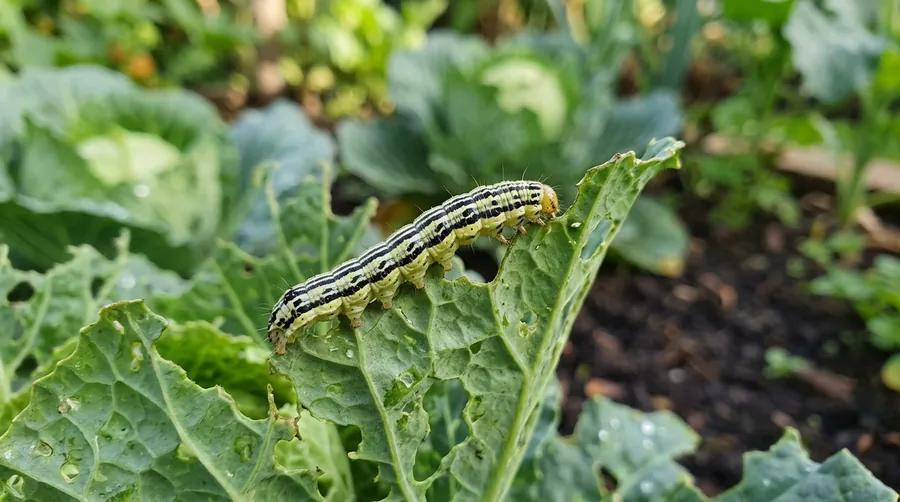
Bluish-gray cross striped cabbageworm with black bands across its back on a cabbage leaf
Recommended Products


What it does
Larvae feed together, chewing numerous holes through cole-crop leaves and tunneling into developing buds and heads. Because females lay eggs in clusters, several caterpillars often appear on the same plant, producing concentrated, patchy damage rather than scattered feeding. They prefer the tender terminal growth and heads, which makes their injury costly on marketable crops.
Where it lives
The cross-striped cabbageworm is found mainly in the eastern, southeastern, and south-central US on cabbage-family crops in gardens and small farms. It is most common in late summer and fall as cole crops mature, favoring cabbage, broccoli, cauliflower, collards, and kale.
How it breeds
Females lay flat clusters of yellowish eggs on the underside of leaves. The gregarious larvae feed for two to three weeks through several instars, then drop to pupate in the soil. Two or more generations occur per year in warmer regions, so infestations can build as the cole-crop season progresses.
What it eats
Larvae feed exclusively on plants in the cabbage family (Brassicaceae): cabbage, broccoli, cauliflower, collards, kale, mustard, and related crops and weeds, favoring the growing tips and heads.
Identification
Mature larvae reach about 18 mm and are bluish-gray on the back with numerous fine black stripes running across the body and a bright yellow line down each side; the underside is greenish-yellow. The adult is a tan to yellowish-brown moth with mottled darker markings. The banded top pattern is distinctive among cabbage caterpillars.
Signs of an infestation
- Numerous holes chewed through cole-crop leaves in patches
- Boring damage in buds, hearts, and developing heads
- Groups of banded bluish-gray caterpillars on the same plant
- Flat clusters of yellow eggs on leaf undersides
- Frass (droppings) accumulating in the crown or head
Prevention tips
- Cover cole crops with floating row cover to block egg-laying
- Scout leaf undersides for egg clusters and young larvae
- Handpick clustered caterpillars and crush egg masses
- Remove crop residue after harvest to reduce carryover
- Rotate brassicas and manage crucifer weeds nearby
Professional solutions
Bacillus thuringiensis (Bt) is very effective against these caterpillars and is the mainstay for gardeners, along with row covers and handpicking. Professional intervention is seldom needed for home plantings. For larger cole-crop operations, your Cooperative Extension office can advise on scouting thresholds and rotation of Bt with other products.
Health & safety
The cross-striped cabbageworm poses no health risk to people or pets; it does not bite, sting, or carry human disease, and the caterpillars are safe to handle or wash off harvested greens. Its impact is agricultural, since group feeding can quickly riddle leaves and ruin the marketable heads of cole crops.
Relevant Products


Frequently asked questions
How do I identify a cross-striped cabbageworm?
Look for a caterpillar up to about three-quarters of an inch, bluish-gray on top with many fine black stripes running crosswise and a bright yellow line down each side. They feed in groups on cabbage, broccoli, and kale, so several often appear on one plant.
What is the best way to control cabbageworms organically?
Bacillus thuringiensis (Bt) is highly effective and selective against cabbage caterpillars, including the cross-striped cabbageworm. Combine it with floating row covers to block egg-laying and handpicking of clustered larvae and yellow egg masses on leaf undersides.
Are these caterpillars safe if I miss some on my greens?
Yes. Cross-striped cabbageworms do not carry human disease and are harmless if accidentally eaten after washing. They are unappetizing rather than dangerous, so soaking and rinsing harvested cole crops removes them; the real concern is the leaf and head damage they cause.
Fact-checked by Morgan Vance, Editorial Director (editorial review, not a professional pest-control or medical sign-off). Last reviewed May 16, 2026. We correct anything a reader shows us is wrong — see our corrections policy.