
Columbine Leafminer
Phytomyza aquilegivora · also called columbine leaf miner, aquilegia leafminer
Quick answer
The columbine leafminer (Phytomyza aquilegivora) is a tiny black fly whose larvae tunnel inside columbine leaves, leaving winding white or tan trails. The damage is cosmetic and rarely harms the plant's health. Adults are small gray-black flies; the mining larvae are the stage gardeners actually notice on Aquilegia foliage.
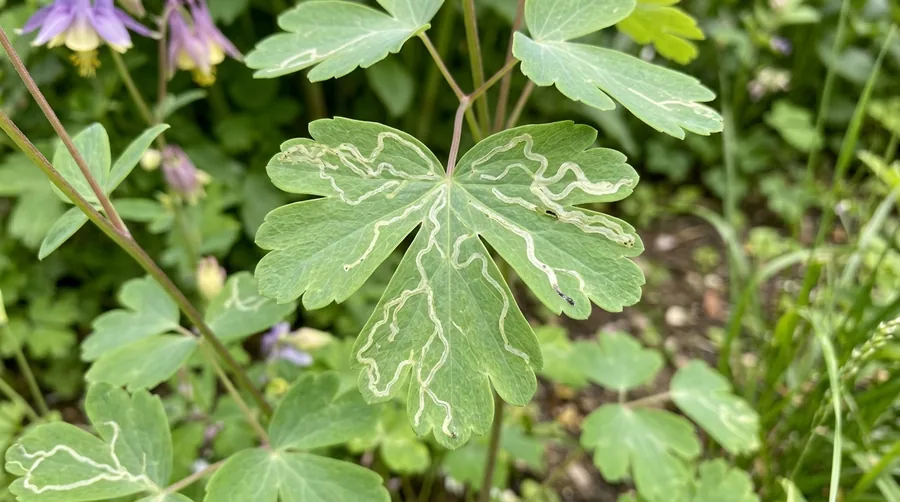
White serpentine leafminer trails winding across a green columbine leaf
Recommended Products


What it does
Adult female flies puncture columbine leaves to feed and lay eggs, and the hatching larvae tunnel between the upper and lower leaf surfaces. As each larva feeds it carves a winding, ever-widening mine, leaving the pale serpentine trails gardeners notice. The damage is disfiguring but almost always cosmetic.
Where it lives
This leafminer lives wherever columbine (Aquilegia) is grown, in home flower beds, borders, and woodland gardens across the northern United States. The larvae live entirely inside the leaves, while the small adult flies rest on nearby foliage. Populations build in spring as new growth appears.
How it breeds
Adults emerge in spring, mate, and lay eggs in the leaf tissue. Larvae mine for one to two weeks, then pupate, often dropping to the soil. There are usually two or more overlapping generations per season, so new mines can appear from spring into summer, especially on tender new leaves.
What it eats
The larvae feed only on the inner leaf tissue of columbine (Aquilegia species). Adult flies take sap from small feeding punctures they make in the leaves. They do not feed on other garden plants.
Identification
The adult is a tiny grayish-black fly only about 2-3 mm long, easily overlooked. The obvious sign is the damage: narrow, winding white or tan tunnels that snake across the green leaf surface. Later mines may merge into pale blotches. Larvae are minute, legless, and pale.
Signs of an infestation
- Winding white or tan serpentine trails on columbine leaves
- Pale blotches where several mines merge
- Small pale larvae visible when a mined leaf is held to light
- Tiny gray-black flies hovering around columbine in spring
- Stippling or pinprick feeding marks on leaf surfaces
Prevention tips
- Pick off and destroy mined leaves as soon as trails appear
- Cut columbine foliage back to the ground after bloom to remove larvae
- Rake and dispose of fallen leaves and debris in autumn
- Encourage natural parasitic wasps by avoiding broad-spectrum sprays
- Inspect new columbine plants for existing mines before planting
Professional solutions
Columbine leafminer almost never needs professional treatment. Removing and destroying affected leaves and cutting plants back after flowering usually keeps it in check. For prized plantings, a county extension office or certified arborist can advise on timing; systemic products are rarely warranted for a cosmetic problem.
Health & safety
The columbine leafminer poses no risk to people or pets. It does not bite, sting, or spread disease, and it feeds only on columbine foliage. The concern is purely aesthetic, disfigured leaves on an ornamental plant, so control is optional and driven by appearance rather than health.
Relevant Products




Frequently asked questions
What causes white squiggly lines on my columbine leaves?
Those winding white or tan trails are the work of columbine leafminer larvae tunneling inside the leaf. The damage looks alarming but is almost always cosmetic and does not kill the plant. Picking off mined leaves and cutting foliage back after bloom keeps it under control.
Do I need to spray for columbine leafminer?
Usually not. Because the damage is cosmetic, most gardeners simply remove mined leaves and cut plants back after flowering. Sprays are rarely justified and can harm the tiny parasitic wasps that naturally keep leafminers in check.
Fact-checked by Morgan Vance, Editorial Director (editorial review, not a professional pest-control or medical sign-off). Last reviewed August 1, 2026. We correct anything a reader shows us is wrong — see our corrections policy.