
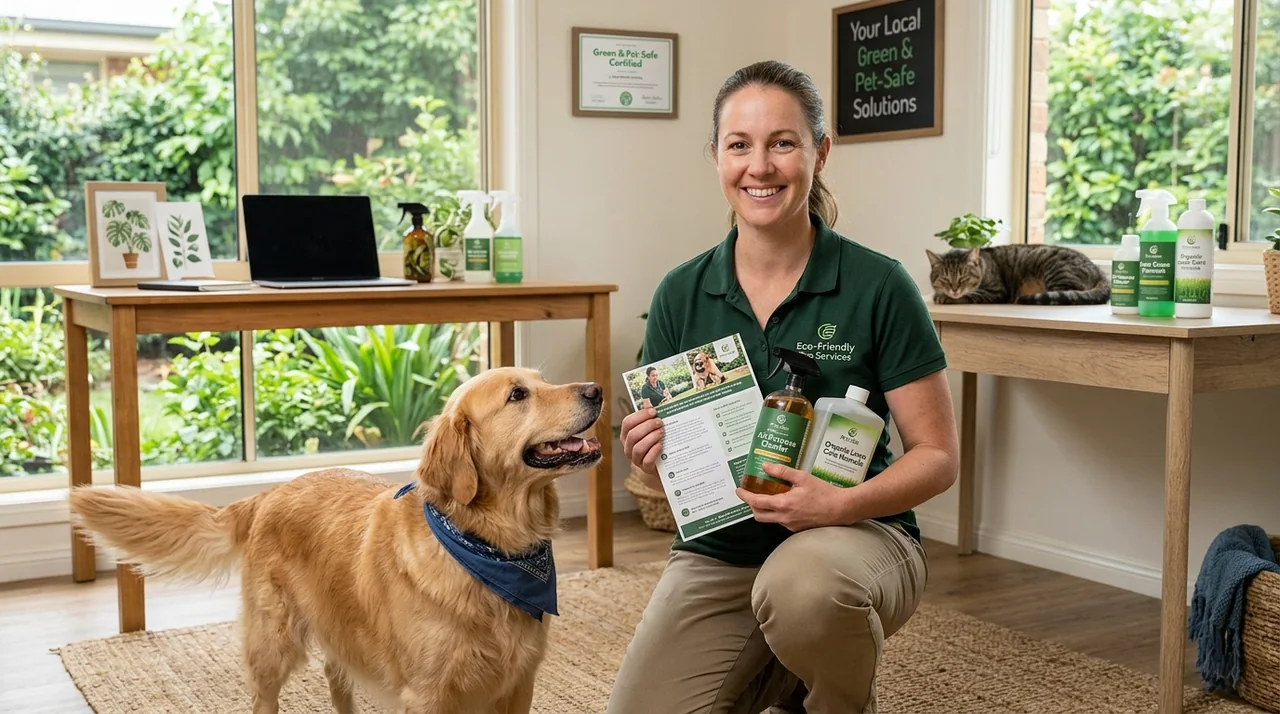
"Green," "natural," and "pet-safe" are appealing words on a pest control ad — but they aren't legally standardized, so they mean whatever the company decides. If reduced chemical exposure matters to you, the key is knowing what genuinely lower-risk service looks like and asking the right questions to find it.
What "Green" and "Pet-Safe" Really Mean
No pest control product is truly non-toxic — even natural, plant-derived actives are still pesticides designed to kill insects. Because terms like "green," "natural," and "pet-safe" have no legal definition, ask each company what it actually means by them. A genuine reduced-risk program is built on integrated pest management (IPM): thorough inspection, sanitation advice, exclusion (sealing entry points), monitoring, and targeted low-toxicity products used only where needed — not blanket spraying of the whole property. The emphasis is on preventing pests from getting in, so less product is needed in the first place.
Lower-Risk Methods and Products
Reputable "green" services lean on approaches that cut exposure rather than eliminate it:
- Physical exclusion and habitat changes that keep pests out in the first place
- Baits and gels placed inside voids and inaccessible spots, which expose people and pets far less than broadcast sprays
- Botanical or minimum-risk actives such as essential-oil-based products, diatomaceous earth, and borates
- Insect growth regulators that target insect development rather than acting as broad poisons
- Precise crack-and-crevice application instead of open-surface spraying
Choosing a Provider and Keeping Pets Safe
Good questions to ask a "green" provider:
- Do you practice IPM, and can you describe it for my situation?
- What products will you use, and can I see the labels or SDS?
- What's your protocol for homes with pets and children?
- How long should pets stay off treated areas?
- Are baits placed in pet-resistant stations?
Setting Reasonable Expectations
Reduced-risk pest control asks a little more patience in exchange for lower chemical exposure. Because it leans on prevention, exclusion, and targeted baiting rather than blanket spraying, results can build over a few visits instead of appearing overnight, and your participation matters — sealing the gaps the technician points out, fixing moisture problems, and keeping food and clutter under control all help the low-toxicity approach work. It's also fair to expect honesty about limits: a good provider will tell you when a particular pest genuinely needs a conventional product, and will explain how it minimizes exposure when using one. Be skeptical of any company promising a completely chemical-free guarantee or claiming its treatment is totally harmless, since even minimum-risk products are pesticides and none is entirely free of precautions.
For any accidental exposure, or if a pet ingests a product, contact your veterinarian or Poison Control at 1-800-222-1222. Remember that all products — natural or synthetic — must be EPA-registered (or qualify as federally exempt minimum-risk) and applied strictly according to their label.