
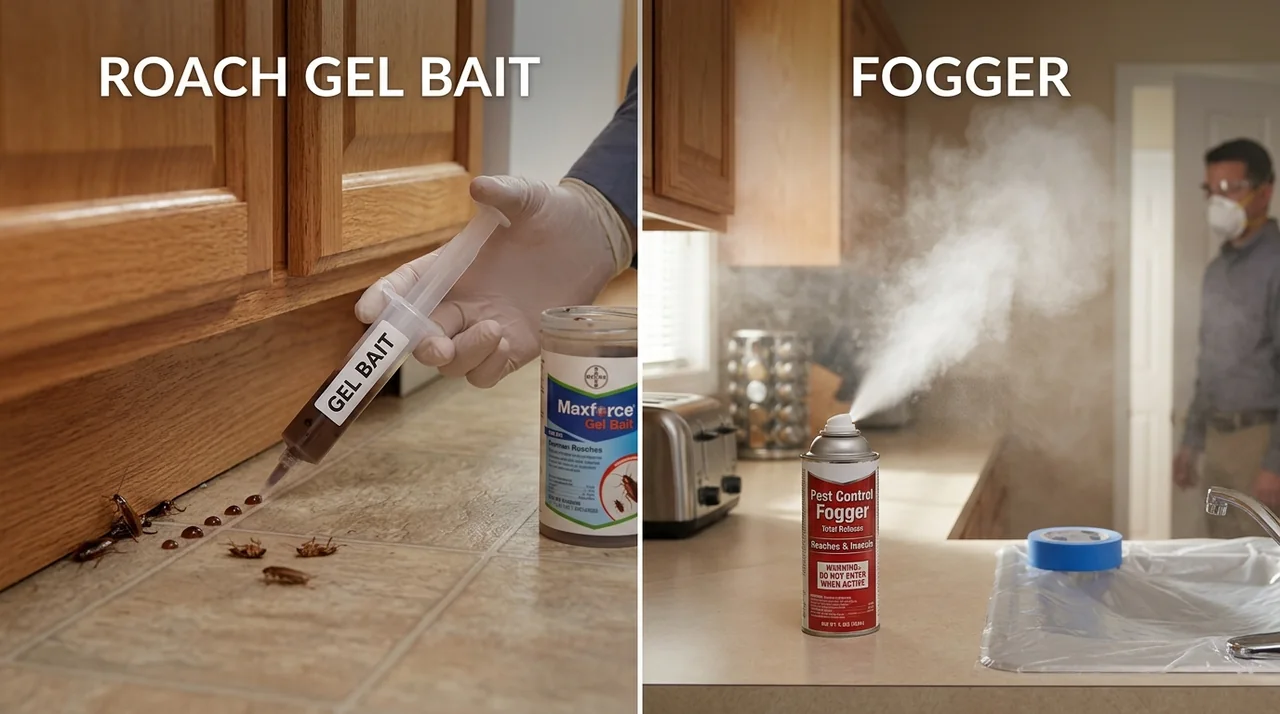


When roaches show up, the tempting move is a "bug bomb" — set it off, leave, come back to a clean house. In reality, gel bait almost always beats a total-release fogger for roach control, and understanding why saves you money, mess, and a genuine safety hazard.
Why Gel Bait Usually Wins
Gel bait is placed exactly where roaches live and travel — inside cracks, under appliances, in the voids behind cabinets. Roaches feed on it and carry the active ingredient back to their harborage. Because German cockroaches (the common indoor species) practice cannibalism and feed on each other's droppings, the active spreads to roaches that never touched the bait directly, including nymphs deep in hiding. The result is a targeted kill with very low household exposure, and no need to evacuate the home while it works.
What Foggers Actually Do — and Don't
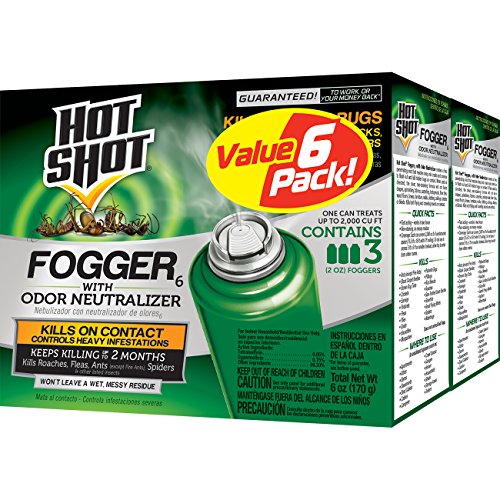
A total-release fogger sprays insecticide upward into open air; the droplets drift and settle on exposed surfaces. That's the core limitation: the fog does not penetrate the cracks, wall voids, and appliance interiors where roaches actually shelter. So a fogger kills the few roaches caught in the open and misses the harborage entirely — often scattering survivors deeper into the structure. It also coats counters, tables, and toys with residue you'll later touch and have to clean.
There's a real safety issue too. Foggers use flammable propellant, and using too many cans or setting one off near a pilot light, stove, or other ignition source has caused fires and explosions. The EPA has repeatedly cautioned that foggers are commonly overused and misused. For everyday roach problems, they're generally not the right tool.
When a Fogger Might Have a Role
Foggers are best suited to knocking down exposed flying insects in an open space, not cracks-and-crevice pests like roaches. If you ever do use one, follow the label to the letter: calculate cans strictly by room volume, remove all people, pets, and fish, cover food and dishes, turn off every ignition source and pilot light, respect the full evacuation time, and ventilate thoroughly before returning.
The Approach That Actually Clears Roaches
For a German cockroach infestation, the evidence-based plan is gel bait plus sanitation plus an insect growth regulator (IGR) — not a bug bomb. Clean up food debris and standing moisture so bait is the most appealing food available, place bait in and around harborage zones, add an IGR to stop survivors from reproducing, and be patient over a couple of weeks. This combination reaches the hidden population a fogger can't, without filling your living space with settling insecticide.
Finding the moisture and clutter that support the infestation matters just as much. German cockroaches thrive on grease, crumbs, and dripping water, and they shelter in stacked cardboard, paper bags, and the warm voids around motors and appliances. Wiping down surfaces, storing food sealed, fixing leaks, and clearing clutter starves them and pushes them toward your bait. If numbers stay high after a couple of weeks, check that you're using enough placements in the right spots — many small dots close to harborage beat a few large ones — and confirm the bait hasn't dried out or been completely eaten. Persistent heavy infestations, especially in the shared walls of apartments, may call for a professional who can treat neighboring units and the shared voids DIY can't reach.
For any pesticide exposure, poisoning, or accidental ingestion, call Poison Control at 1-800-222-1222.


