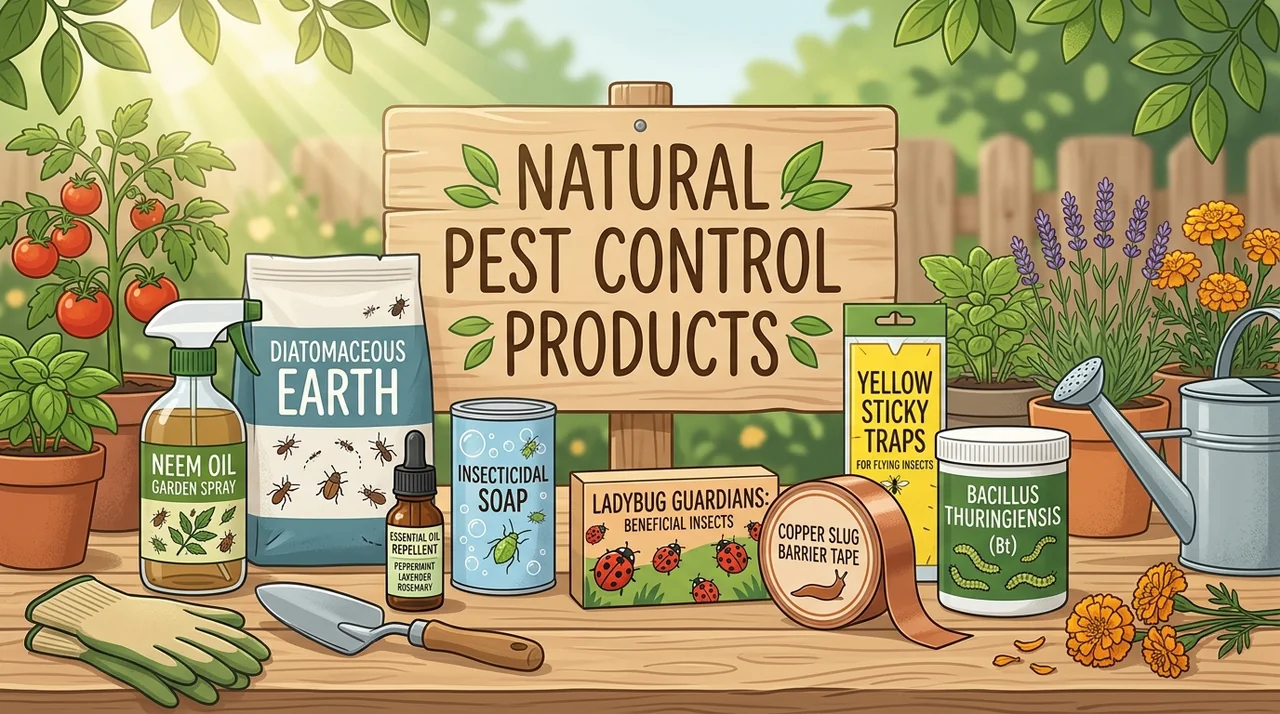
"Natural" and "pet-safe" pest control appeals to households that want to avoid conventional synthetic pesticides, especially around children and animals. Several lower-toxicity products genuinely have a place in a home pest program, but "natural" does not automatically mean harmless, so this guide explains the useful categories and how to use them wisely, alongside the effectiveness companion in this section.
Categories Worth Knowing
These are the lower-toxicity tools most commonly used in and around homes:
Diatomaceous earth (food-grade): a fine powder of fossilized diatoms that damages the exoskeletons of crawling insects like ants, roaches, and bed bugs, causing them to dry out. It works mechanically, not chemically, but only while dry, and the dust can irritate lungs, so apply a thin layer in cracks and wear a mask.
Insecticidal soaps and horticultural oils: effective on soft-bodied insects (aphids, mites) by contact; commonly used on plants.
Botanical/essential-oil insecticides: products based on oils such as peppermint, rosemary, thyme, or cedar. Some are exempt from full EPA registration under a "minimum-risk" provision; they can repel or kill on contact but generally offer short residual and variable results.
Boric acid / borate baits: low-toxicity to humans in the ways it is used, but still a pesticide, effective against ants and roaches as a bait. Must be kept away from children and pets despite its "low-tox" reputation.
Beneficial and mechanical options: nematodes for some soil pests, sticky traps, and physical exclusion, the least-toxic approach of all.
"Natural" Still Means Read the Label
An important reality check: a product being plant-derived or "natural" does not mean it is automatically safe for pets or people. Some essential oils, tea tree, pennyroyal, and certain concentrated oils, can be toxic to cats and dogs. Cats are especially sensitive because they metabolize some compounds differently.
Choose products actually labeled for the pest and setting you have, and follow any directions and precautions on them, including EPA-registered natural products and minimum-risk products alike.
Keep even low-toxicity products, including boric acid and diatomaceous earth, away from pets and children, and apply them where animals cannot contact or ingest them.
Verify pet safety for essential-oil products with a reliable source or your veterinarian, rather than assuming.
Use Them as Part of a Bigger Plan
Natural products are most effective as one layer of an integrated approach, not a standalone miracle. Pair them with the fundamentals that do the heavy lifting: sealing entry points, storing food in airtight containers, fixing moisture, and cleaning up. Set realistic expectations, many natural options provide contact kill or repellency with limited residual, so they need reapplication and consistency. Match the tool to the pest, too: diatomaceous earth suits dry cracks where crawling insects travel, baits suit ants and roaches, and horticultural oils suit soft-bodied plant pests. Using the wrong low-tox product for a given pest is a common reason people conclude, unfairly, that "natural" never works.
If a pet or child ingests any pest-control product, natural or not, or shows symptoms after exposure, call Poison Control at 1-800-222-1222 (free, 24/7), or contact your veterinarian or the ASPCA Animal Poison Control Center for animals, and keep the product label available.
Frequently Asked Questions
Not automatically. Some natural products, particularly concentrated essential oils like tea tree and pennyroyal, can be toxic to cats and dogs, and cats are especially sensitive because of how they metabolize certain compounds. Even low-toxicity options like boric acid and diatomaceous earth should be kept away from pets. Always read the label, verify pet safety with a reliable source or your veterinarian, and apply products where animals cannot reach them.
Food-grade diatomaceous earth is a fine powder that works mechanically, abrading the waxy exoskeleton of crawling insects so they dry out and die. It can help against ants, roaches, and bed bugs, but only while it stays dry, so it loses effect when damp. Apply a thin layer in cracks and crevices, and wear a mask, since the dust can irritate the lungs if inhaled.
Sometimes for minor issues, but they work best as one layer of an integrated plan rather than a standalone fix. Many natural options provide contact kill or repellency with limited lasting residual, so they need reapplication and consistency. Pair them with the fundamentals, sealing entry points, airtight food storage, fixing moisture, and cleaning, which do most of the work in preventing and reducing pests.