
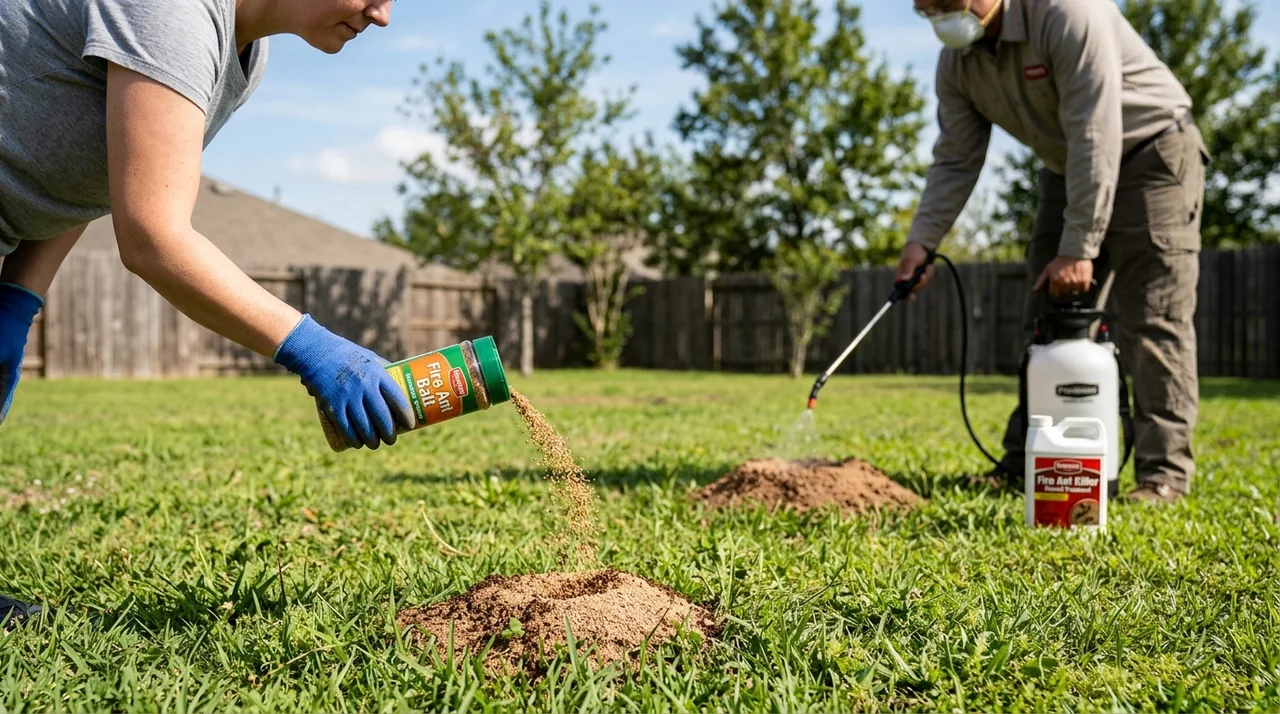


Fire ants aren't just another ant on the sidewalk. Imported red fire ants (Solenopsis invicta) build large mound colonies, deliver painful stinging pustules, and shrug off many general-purpose ant products. Because their colonies are protected by a deep, well-defended queen — and often multiple queens — the products that actually work are the ones that reach her. That single fact shapes every buying decision below.
How Fire Ant Baits Work
Most effective fire ant products are baits: a food attractant (usually soybean oil on corn grit) carrying a slow-acting active ingredient. Foragers collect the bait, carry it back, and share it colony-wide through feeding, eventually reaching the queen. Two families dominate:
- Insect growth regulators (IGRs) such as methoprene and pyriproxyfen — these sterilize the queen and stop new workers developing over several weeks. Very low toxicity, but slow.
- Slow-acting toxicants such as indoxacarb, hydramethylnon, and spinosad — these kill the colony faster (often one to two weeks) while still being carried inside before they act.
Mound Treatments for Fast Knockdown
When a single mound sits by a doorway, patio, or playset, a bait's slow timeline isn't ideal. Mound drenches (a large volume of diluted liquid insecticide poured over and into the mound) or granular-then-water treatments kill on contact and can collapse that mound in a day or two. Do not disturb or rake the mound first — that just triggers the colony to relocate and split. Treat in the cool of early morning or evening, when the colony sits nearer the surface, and use enough volume to soak deep toward the queen chamber rather than just wetting the top.
The Two-Step Method
Extension entomologists widely recommend a two-step approach: broadcast a bait across the whole yard once or twice a year, then spot-treat individual nuisance mounds as they appear. Broadcasting with a handheld spreader at the low rate on the label covers far more foraging territory than treating visible mounds alone, and it reaches colonies you can't see. Baits are economical, low-toxicity, and hit the whole yard; mound treatments give you fast relief exactly where you need it. Used together they outperform either alone and use less total product than blanket spraying.
Timing the broadcast to the season helps too. Fire ants forage most actively in warm, mild weather, so spring and fall applications tend to be picked up fastest, while foraging slows in extreme summer heat or cold snaps. If a colony survives a first bait, don't assume the product failed — re-check foraging activity, confirm the bait is still fresh rather than rancid, and give an IGR the full several weeks it needs to sterilize the queen. And because imported fire ants readily re-invade from neighboring untreated yards, lasting control usually means treating on a routine schedule rather than expecting a single application to end the problem for good.
Fire ant stings cause painful welts, and a minority of people have serious allergic reactions — seek emergency care for spreading swelling, hives, or trouble breathing. Always follow the EPA-registered product label for rates, timing, and re-entry. For any accidental ingestion or exposure, call Poison Control at 1-800-222-1222, and keep children and pets off treated areas as the label directs.


