
Webbing Clothes Moth
Tineola bisselliella · also called webbing clothes moths, common clothes moth, clothing moth
Quick answer
The webbing clothes moth (Tineola bisselliella) is a small, plain golden-buff moth that shuns light and hides in dark closets. Its larvae eat keratin in wool, fur, silk, and feathers, leaving irregular holes and silk webbing on fabric. The adults do not feed; the caterpillars cause all the damage to clothing and textiles.
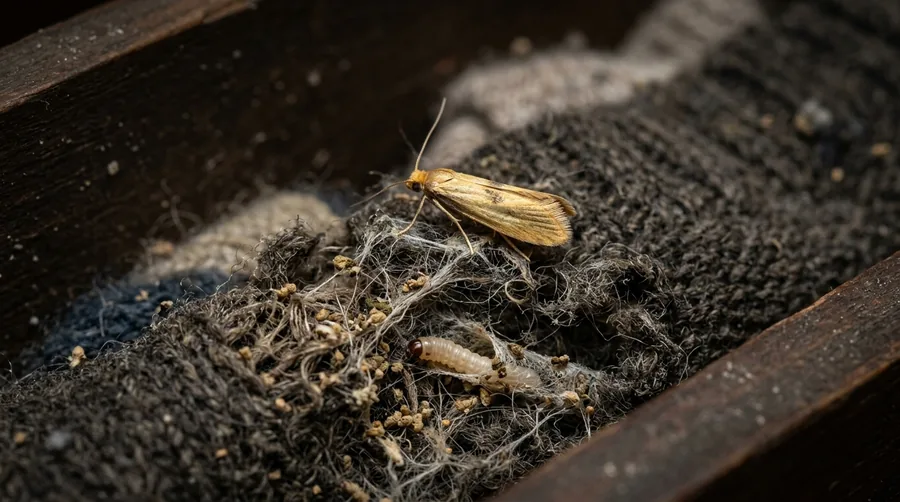
Small plain golden-buff webbing clothes moth on a dark wool sweater in a closet
Recommended Products


What it does
The webbing clothes moth avoids light and hides in dark, undisturbed places, so it is rarely seen flying openly like a pantry moth. Larvae are the feeding stage, chewing keratin fibers and spinning fine silk webbing and threads across the fabric surface as they graze, which leaves irregular holes and a matted look.
Where it lives
It lives indoors in closets, drawers, storage boxes, attics, and behind furniture, wherever animal-fiber materials sit undisturbed. Larvae infest wool clothing, blankets, carpets, upholstery, fur, felt, and feathers. It is found in homes nationwide, favoring dark, still, humid spots where stored garments are seldom moved.
How it breeds
A female lays around 40 to 50 eggs, cementing them onto fibers. Larvae hatch, feed and web for weeks to months depending on temperature, then spin a cocoon and pupate. Several generations can occur a year indoors, and slow, hidden feeding means damage often accumulates before the moths are noticed.
What it eats
Larvae feed on keratin, the protein in wool, fur, silk, feathers, felt, and hair. They especially target soiled fabrics with sweat, food, or body oils. Adults have no functional mouthparts and do not eat, so they cause no damage themselves.
Identification
Adults are small, about 1/2-inch wingspan, uniform golden-buff with a small tuft of reddish hairs on the head and no wing spots. Larvae are shiny white caterpillars with a dark head. Fine silk webbing on the fabric, rather than a portable case, distinguishes this species from the casemaking clothes moth.
Signs of an infestation
- Irregular holes in wool, fur, or silk items
- Fine silk webbing or threads on fabric surfaces
- Small white caterpillars on or in stored garments
- Sand-like droppings matching the fabric color
- Small buff moths near closets, avoiding light
Prevention tips
- Clean garments before long-term storage to remove food and sweat
- Store woolens in airtight containers or garment bags
- Regularly wear, air, and rotate stored clothing
- Vacuum closets, carpets, and under furniture often
- Use pheromone monitoring traps in closets
Professional solutions
Small outbreaks are often handled with thorough cleaning, freezing or hot-laundering affected items, and vacuuming. A professional is worthwhile for widespread damage, valuable textiles, or infestations in carpets and upholstery, offering inspection, targeted treatment, and advice on protecting heirlooms.
Health & safety
Webbing clothes moths do not bite, sting, or transmit disease and pose no direct health risk. Their harm is material: larvae destroy wool, fur, and other animal-fiber items, sometimes ruining valuable clothing, carpets, and heirlooms before the infestation is noticed.
Relevant Products


Frequently asked questions
What is eating holes in my wool clothes?
Irregular holes in wool, fur, or silk, along with fine silk webbing, usually mean webbing clothes moth larvae. The larvae feed on keratin in animal fibers, especially on soiled areas. The small buff adult moths hide from light, so damage is often noticed before the moths are.
How do I get rid of clothes moths?
Remove and clean or hot-launder affected items, freeze delicate pieces for several days to kill larvae and eggs, and vacuum closets, carpets, and under furniture thoroughly. Store cleaned woolens in airtight containers, and use pheromone traps to monitor for continued activity.
Do mothballs work against clothes moths?
Mothball products can help only in sealed containers where their vapors build up, and they must be used strictly according to the label because the active ingredients are toxic. Cleaning, freezing, airtight storage, and vacuuming are the core, lower-risk steps most experts emphasize.
Fact-checked by Morgan Vance, Editorial Director (editorial review, not a professional pest-control or medical sign-off). Last reviewed August 9, 2026. We correct anything a reader shows us is wrong — see our corrections policy.