
Casemaking Clothes Moth
Tinea pellionella · also called casemaking clothes moths, case-bearing clothes moth
Quick answer
The casemaking clothes moth (Tinea pellionella) is a small brownish moth with faint dark wing spots whose larva carries a portable silk case as it feeds. The caterpillars eat wool, fur, and other animal fibers, chewing holes in stored clothing, carpets, and upholstery. Adults do not feed and are weak, light-avoiding fliers.
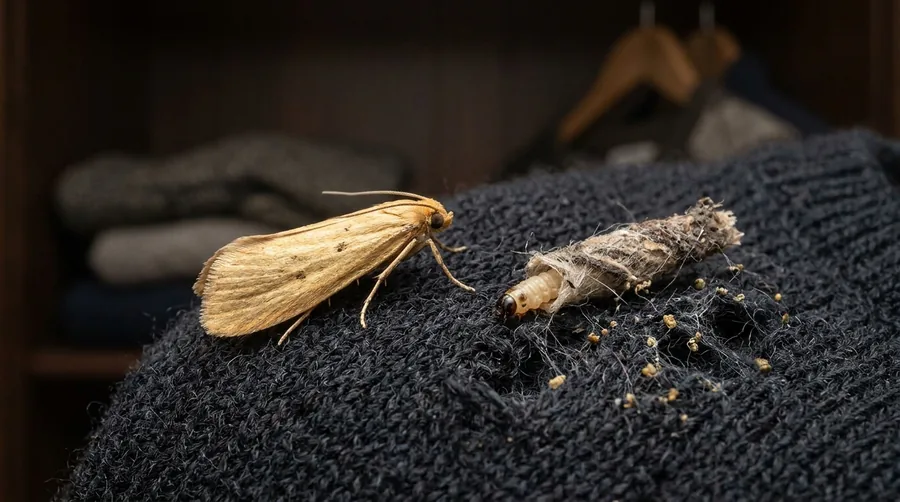
Small brownish casemaking clothes moth larva dragging a silk case across a wool blanket
Recommended Products


What it does
This clothes moth is named for the portable silk-and-fiber case its larva builds and drags along as it feeds, retreating into it when disturbed. Like the webbing species, adults avoid light and hide in dark, quiet places. The larvae graze on animal-fiber materials, leaving holes, while the little case moves with them across the fabric.
Where it lives
It infests dark, undisturbed storage: closets, drawers, boxes, attics, and areas behind or beneath furniture holding wool, fur, or other animal fibers. Larvae attack woolens, carpets, upholstery, felt, and feathers. It occurs in homes nationwide, often alongside or in place of the webbing clothes moth.
How it breeds
A female lays eggs on suitable fibers. Each larva constructs a silk case, enlarging it as it grows while feeding for weeks to months, then pupates inside the case. Multiple generations can occur indoors each year, and the slow, concealed feeding means textile damage often builds up unnoticed.
What it eats
Larvae feed on keratin in wool, fur, feathers, felt, hair, and silk, favoring items soiled with sweat, food, or oils. Adults do not feed, so all damage comes from the case-bearing caterpillars grazing on animal-fiber materials.
Identification
Adults are small, brownish-buff, with three faint dark spots on each forewing, slightly darker and more marked than the plain webbing clothes moth. The clearest sign is the larva's small, portable silk case, colored like the fabric it has eaten, seen dragging across infested items.
Signs of an infestation
- Small silk cases moving on or lying against fabric
- Irregular holes in wool, fur, or felt items
- Brownish, faintly spotted moths near dark closets
- Caterpillars withdrawing into a portable case when touched
- Damage concentrated in stored, undisturbed garments
Prevention tips
- Clean clothing before storing to remove sweat and food
- Store animal-fiber items in airtight containers or bags
- Air, wear, and rotate stored garments regularly
- Vacuum closets, rugs, and under furniture frequently
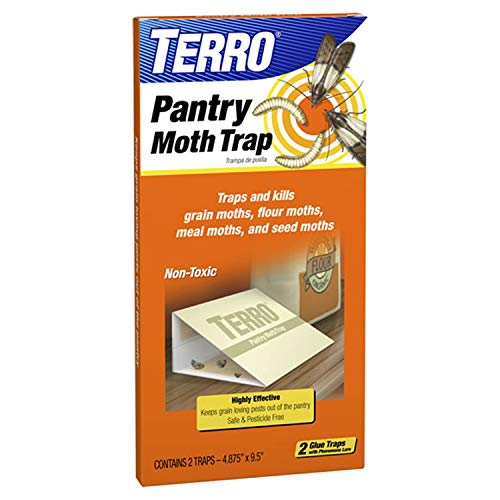
- Monitor closets with pheromone traps
Professional solutions
As with the webbing species, cleaning, freezing or hot-laundering items, and vacuuming clear most infestations. Professionals help with extensive damage, valuable or antique textiles, or carpet and upholstery infestations, providing inspection and targeted treatment while protecting delicate materials.
Health & safety
Casemaking clothes moths do not bite, sting, or spread disease and pose no direct health risk. Their impact is purely material: larvae damage wool, fur, and other animal-fiber goods, potentially ruining clothing, rugs, and heirlooms if an infestation goes unaddressed.
Relevant Products


Frequently asked questions
What is the little case dragging across my sweater?
That is the larva of a casemaking clothes moth inside the portable silk case it builds and carries as it feeds. The case is often colored like the fabric it has eaten. The larva grazes on wool and other animal fibers, leaving holes, and hides in the case when disturbed.
How is the casemaking clothes moth different from the webbing kind?
The casemaking clothes moth larva builds and drags a portable silk case and its adult has faint dark wing spots, while the webbing clothes moth spins silk directly on the fabric and the adult is plain buff. Both larvae eat keratin in wool, fur, and similar animal fibers.
How do I stop casemaking clothes moths?
Clean or hot-launder affected items, freeze delicate pieces for several days, and vacuum closets, carpets, and under furniture thoroughly. Store cleaned woolens in airtight containers, keep garments aired and rotated, and use pheromone traps to monitor for ongoing activity.
Fact-checked by Morgan Vance, Editorial Director (editorial review, not a professional pest-control or medical sign-off). Last reviewed June 1, 2026. We correct anything a reader shows us is wrong — see our corrections policy.