Striped Bark Scorpion
Centruroides vittatus · also called striped bark scorpion, common striped scorpion
Quick answer
The striped bark scorpion (Centruroides vittatus) is the most common and widespread scorpion in the central and south-central US, tan with two dark lengthwise stripes down its back. It hides under rocks, bark, and debris and wanders indoors for shelter. Its sting is painful, like a bee or wasp, but is rarely medically serious for most healthy adults.
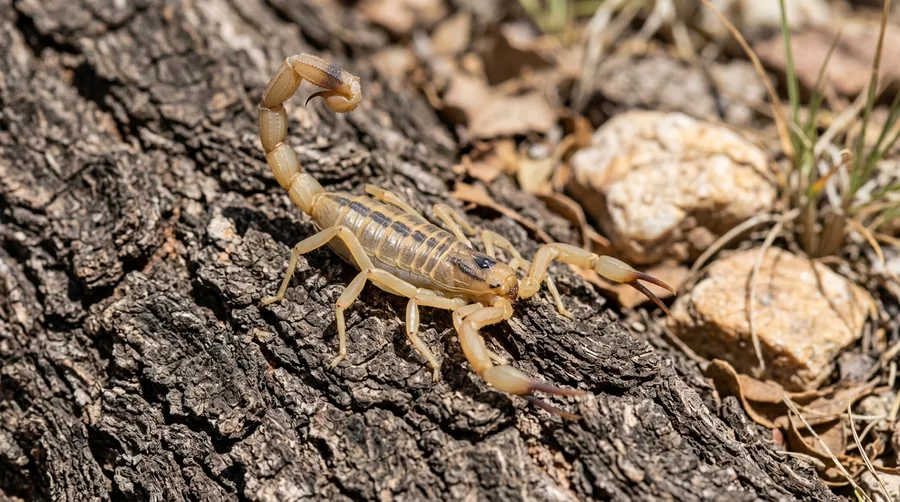
Tan striped bark scorpion with two dark lengthwise stripes on its back on a stone at night
Recommended Products
See the full ranking →


What it does
The striped bark scorpion is nocturnal, sheltering by day and hunting insects at night. It is a capable climber that hides under bark and debris and can wander onto walls. It stings defensively when disturbed, such as when a person reaches under an object or a scorpion is trapped in clothing or bedding. It glows under UV light.
Where it lives
It occupies a wide range of habitats, from deserts to woodlands and grasslands, sheltering under rocks, logs, loose bark, and yard debris and beneath objects on the ground. It readily enters homes for shelter, showing up in living areas, closets, and shoes. It is the most widespread US scorpion, centered on the south-central states.
How it breeds
Striped bark scorpions bear live young that ride on the mother's back until their first molt. They mature over one to a few years and can live several years. Populations are active from spring through fall, retreating and slowing in cold weather, and individuals are often encountered singly rather than in large groups.
What it eats
They prey on insects and other small arthropods, including crickets, roaches, and spiders, grasping prey with their pincers and stinging to subdue it. They do not feed on people; stings to humans are strictly defensive and occur when the scorpion is touched, pressed, or trapped.
Identification
It is slender, about 2-2.75 inches, yellowish to tan, with two broad dark stripes running lengthwise down the back and thin pincers and tail. The paired dark stripes are the key field mark. Like other scorpions, it fluoresces under UV light, which helps locate it at night.
Signs of an infestation
- A tan scorpion with two dark lengthwise stripes on its back
- Scorpions found under rocks, bark, logs, and yard debris
- Scorpions wandering indoors into closets, shoes, and bedding
- Blue-green glow when scanned with a UV black light at night
- Sightings concentrated in south-central and nearby states
Prevention tips
- Seal gaps around doors, windows, plumbing, and the foundation
- Fit tight door sweeps and repair damaged screens
- Clear rocks, logs, and debris away from the foundation
- Shake out shoes, clothing, and bedding before use
- Use a UV black light at night to find and remove scorpions
Professional solutions
For repeated indoor sightings, a pest professional can apply EPA-labeled treatments, reduce outdoor harborage, and seal entry points, which together give the most reliable control. DIY exclusion, debris removal, and careful nighttime removal handle many cases, but persistent indoor activity is worth a professional assessment.
Health & safety
A striped bark scorpion sting is painful, with localized burning, redness, and swelling similar to a bee or wasp sting, and is rarely medically serious for most healthy adults. Reactions can be stronger in children or those with allergies. Monitor symptoms and call Poison Control at 1-800-222-1222 or seek care if a reaction is severe.
Relevant Products




Frequently asked questions
Is a striped bark scorpion sting dangerous?
For most healthy adults, the sting is painful but not medically serious, causing localized burning, redness, and swelling like a bee or wasp sting. Reactions can be stronger in children or people with allergies. Monitor symptoms and call Poison Control at 1-800-222-1222 or seek care if severe.
How is a striped bark scorpion different from an Arizona bark scorpion?
The striped bark scorpion has two dark lengthwise stripes down a tan back and a sting comparable to a bee. The Arizona bark scorpion is plainer pale tan and far more venomous. They also differ in range, though both climb and both glow under UV light.
How do I keep scorpions out of my house?
Seal gaps around doors, windows, plumbing, and the foundation, fit tight door sweeps, and clear rocks, logs, and debris from around the house. Shake out shoes and bedding, and use a UV black light at night to spot and remove any that get inside.
Fact-checked by Morgan Vance, Editorial Director (editorial review, not a professional pest-control or medical sign-off). Last reviewed June 2, 2026. We correct anything a reader shows us is wrong — see our corrections policy.