Jumping Worm
Amynthas spp. · also called Asian jumping worm, crazy worm, snake worm
Quick answer
Jumping worms (Amynthas species) are invasive Asian earthworms that thrash wildly like a snake when handled. They live in the top layer of soil and leaf litter, devouring organic matter and leaving dry, grainy castings like coffee grounds. This strips nutrients, harms plant roots, and degrades gardens, lawns, and forest soil. They do not harm people.
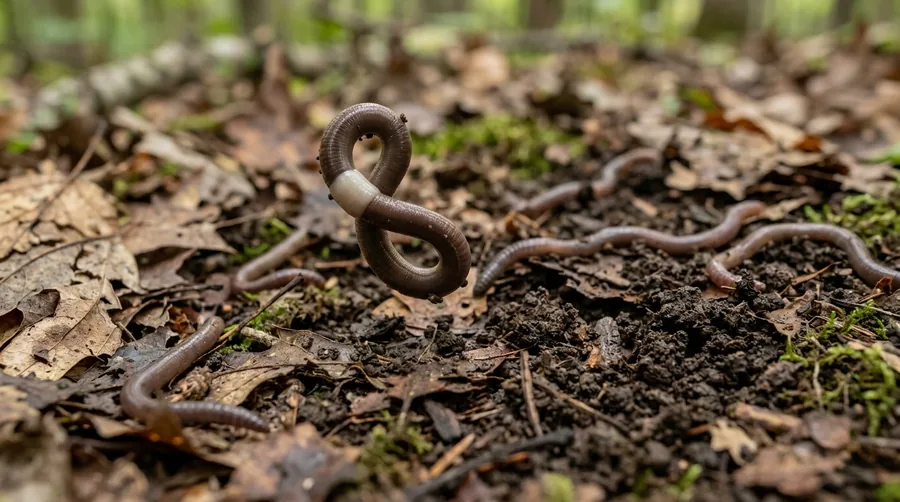
Dark jumping worm with a smooth milky-white band thrashing in dark, granular soil
Recommended Products


What it does
Jumping worms live and feed in the top inch or two of soil and leaf litter, consuming organic matter far faster than native earthworms. When disturbed they thrash violently, slither like a snake, and can shed their tail to escape. Their feeding turns rich soil into loose, dry, grainy pellets that resemble coffee grounds and no longer hold plants well.
Where it lives
These worms colonize gardens, flower beds, mulch piles, lawns, and forest floors, staying near the surface. Native to East Asia, they have spread through much of the eastern and midwestern US and beyond, mainly by hitchhiking in potted plants, mulch, compost, and soil, and as tiny cocoons on tools and tires.
How it breeds
Jumping worms are parthenogenetic, so a single worm can reproduce without a mate, and they complete their life cycle in one season. Adults die at frost, but they leave behind tiny, hardy cocoons in the soil that overwinter and hatch in late spring. Populations can build explosively within a single year.
What it eats
Jumping worms eat organic matter in the top layer of soil: leaf litter, mulch, compost, and fine roots. Unlike deeper-burrowing native worms, they strip this surface layer bare, consuming the nutrients plants need rather than mixing them into the soil.
Identification
They are dark gray-brown and firmer than common earthworms, 1.5 to 8 inches long, moving with a fast, snake-like thrash. The key mark is the clitellum, the band: on jumping worms it is smooth, milky-white to gray, and completely encircles the body, versus the raised, reddish, partial band of European earthworms. The telltale sign is coffee-ground-textured soil.
Signs of an infestation
- Soil surface that looks like loose coffee grounds
- Worms that thrash and jump when disturbed
- A smooth, pale band that fully encircles the worm's body
- Thinning mulch and struggling, easily uprooted plants
- Bare, granular soil under trees where litter used to be
Prevention tips
- Inspect potted plants, mulch, and compost for worms and cocoons before adding them
- Buy compost and mulch that was heated to cocoon-killing temperatures
- Clean soil off tools, boots, and tires between gardens
- Never dump unused fishing bait, which may include jumping worms
- Isolate and monitor new plantings before spreading their soil around your yard
Professional solutions
There is no proven chemical or biological treatment that selectively eliminates established jumping worms, and pesticides are not registered for this use. Management focuses on prevention and containment: not moving infested soil, mulch, or plants. Extension offices and some landscapers can confirm identification and advise on limiting spread within a property.
Health & safety
Jumping worms are not dangerous to people or pets; they do not bite, sting, or carry disease, and are not toxic if a curious pet mouths one. The harm is ecological and horticultural: they degrade garden and forest soil, undermine plant roots and lawns, and can reduce the productivity of beds and landscapes.
Relevant Products


Frequently asked questions
How can I tell a jumping worm from a regular earthworm?
Jumping worms thrash and slither like a snake when handled and may shed their tail. Their band (clitellum) is smooth, pale, and wraps all the way around the body, while common earthworms have a raised, reddish, partial band. The soil around them looks like dry coffee grounds.
Are jumping worms harmful?
Not to people or pets; they do not bite or spread disease. But they are ecologically harmful. They strip the top layer of soil of nutrients and organic matter, leaving grainy castings that erode easily, harm plant roots, and degrade gardens, lawns, and forest floors.
How do I get rid of jumping worms?
There is no registered pesticide that selectively kills them, so control centers on prevention: do not move infested soil, mulch, compost, or plants, and clean tools and tires. Some gardeners hand-remove and destroy worms and solarize infested soil, but eradication is very difficult once they are established.
Fact-checked by Morgan Vance, Editorial Director (editorial review, not a professional pest-control or medical sign-off). Last reviewed July 8, 2026. We correct anything a reader shows us is wrong — see our corrections policy.