
Bean Leaf Beetle
Cerotoma trifurcata · also called bean leaf beetles
Quick answer
The bean leaf beetle (Cerotoma trifurcata) is a small, variable reddish-to-yellow beetle with black spots and a black triangle behind its head. Adults chew round holes in soybean and snap-bean leaves and nibble pods, while larvae feed on roots. It also transmits bean pod mottle virus, adding to the damage it causes legumes.
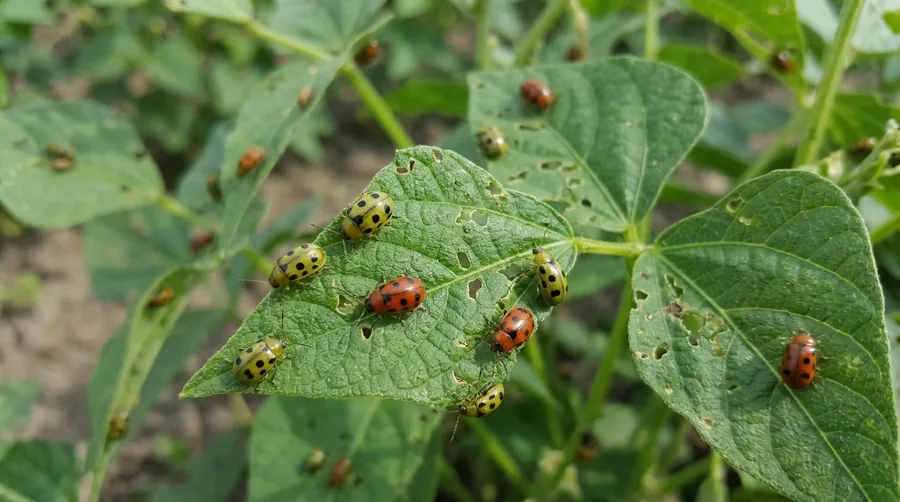
Reddish and yellow bean leaf beetle with black spots and a dark triangle behind its head on a bean leaf
Recommended Products


What it does
Adults chew neat, round holes between the veins of bean and soybean leaves and can scar pods late in the season. They are quick to drop from the plant when disturbed. Larvae live in the soil, feeding on roots and nitrogen-fixing nodules, which weakens the plant less visibly than adult leaf damage.
Where it lives
Bean leaf beetles are found in bean and soybean plantings across the eastern and central US. Adults overwinter under leaf litter and in wooded edges near fields, then move into early-planted legumes in spring. Home gardeners see them on snap beans, lima beans, and cowpeas.
How it breeds
Overwintered adults lay orange eggs in the soil near host plants in spring. Larvae feed on roots and nodules for several weeks, pupate in the soil, and emerge as a new generation of adults. Much of the US sees one to two generations per year depending on the region and season length.
What it eats
Adults feed on the leaves, stems, and pods of legumes, especially soybeans, snap beans, lima beans, and cowpeas. Larvae feed underground on the roots and root nodules of the same host plants.
Identification
Adults are about 5 mm long and highly variable in color: red, tan, orange, or yellow, usually with four black spots and black margins on the wing covers. A small black triangle just behind the head is the most reliable identifying mark, present even on beetles that lack spots.
Signs of an infestation
- Round, smooth-edged holes chewed between leaf veins
- Small reddish or yellow spotted beetles that drop when disturbed
- Shallow scarring or feeding scars on developing pods
- Skeletonized seedling leaves in early-planted beans
- A black triangle mark behind the head on captured beetles
Prevention tips
- Delay planting slightly to avoid the first flush of overwintered adults
- Cover seedlings with row cover during early-season pressure
- Remove nearby leaf litter and weedy overwintering shelter
- Rotate legumes away from last year's bean ground
- Scout early plantings, which are hit hardest, and treat only at damaging levels
Professional solutions
Most home gardens tolerate bean leaf beetle feeding with handpicking and row covers. Because the beetle can spread bean pod mottle virus, seed growers and larger producers watching for virus should consult their Cooperative Extension office for threshold-based recommendations and current insecticide guidance rather than routine spraying.
Health & safety
The bean leaf beetle is harmless to people and pets, with no bite, sting, or human-disease risk. Its significance is agricultural: besides chewing leaves and pods, it transmits plant viruses such as bean pod mottle virus and southern bean mosaic virus, which can reduce legume yield and seed quality.
Relevant Products


Frequently asked questions
What makes round holes in bean leaves?
Neat, round holes chewed between the veins of bean or soybean leaves are typical bean leaf beetle damage. Look for small reddish, tan, or yellow beetles with black spots and a black triangle behind the head; they drop off the plant quickly when disturbed.
Does the bean leaf beetle spread plant disease?
Yes. Along with its chewing damage, the bean leaf beetle transmits bean pod mottle virus and southern bean mosaic virus to legumes, which can lower yield and seed quality. This plant-disease role, not any human risk, is why growers monitor it closely.
How do I protect my beans from bean leaf beetles?
Cover seedlings with floating row cover, since early plantings are hit hardest, handpick beetles into soapy water, rotate beans away from last year's ground, and clear weedy overwintering shelter nearby. Reserve insecticides for damaging populations and follow the label.
Fact-checked by Morgan Vance, Editorial Director (editorial review, not a professional pest-control or medical sign-off). Last reviewed May 14, 2026. We correct anything a reader shows us is wrong — see our corrections policy.