Termite treatment is one of the larger pest-control expenses a homeowner faces, and quotes for the same house can vary widely. Rather than quote a single number that won't match your situation, it's more useful to understand what actually drives the cost — so you can read a quote, compare bids, and budget realistically.
What Drives Termite Treatment Cost
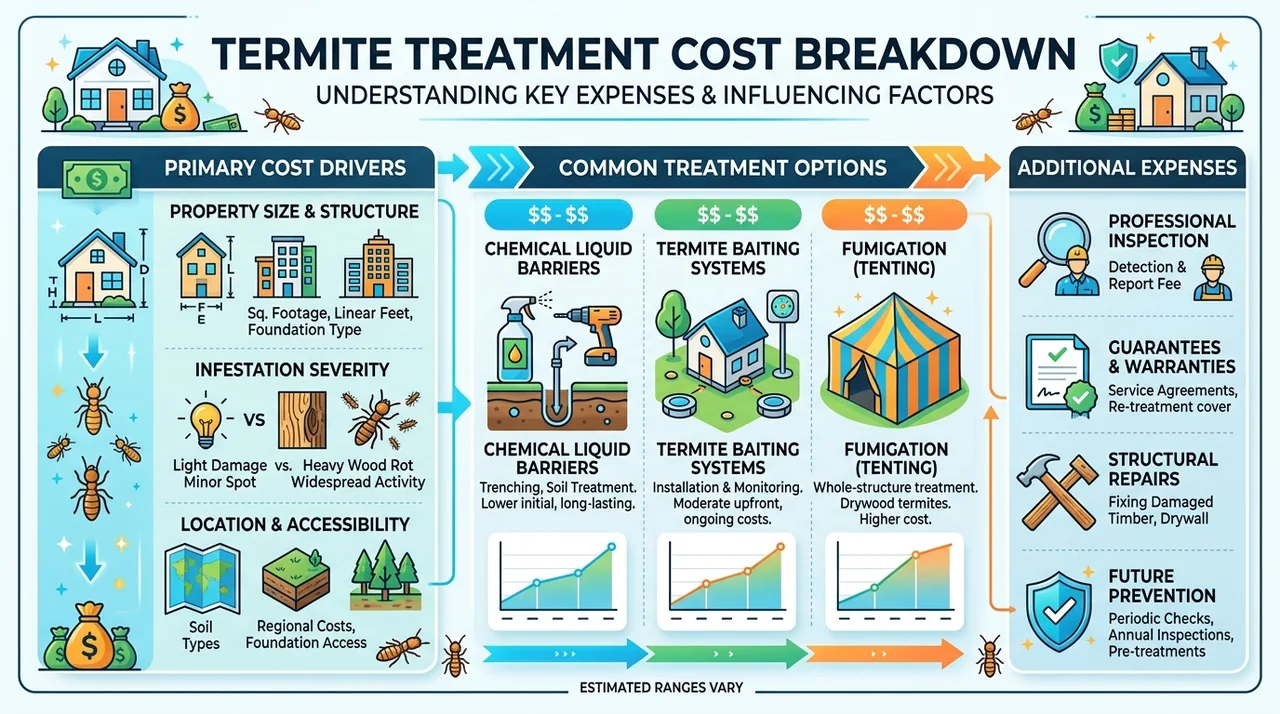
The biggest cost factors are:
- Treatment type — a liquid soil barrier, a bait station system, or whole-structure fumigation each price very differently.
- Home size and construction — linear feet of foundation, and whether you have a slab, crawlspace, or basement.
- Severity and extent of the infestation, and the termite species (subterranean vs. drywood).
- Accessibility of the affected areas, and your region and local market.
Treatment Types and Relative Cost
- Liquid termiticide barrier (applied to the soil around and under the structure) — a common approach for subterranean termites, priced largely by linear footage of foundation.
- Bait station systems — installed around the perimeter and monitored over time; typically an installation cost plus ongoing monitoring fees.
- Fumigation (tenting) — used for widespread drywood termites; a whole-house treatment that is usually the most expensive, priced by the structure's volume.
- Spot / localized treatments — the cheapest option for small, confined infestations, but they carry the risk of missing hidden colonies elsewhere in the structure.
Ongoing and Hidden Costs
Beyond the initial treatment, budget for annual inspection or renewal fees that keep a warranty (often called a bond) active, and understand the re-treatment guarantee terms. Separately — and this can be the larger figure — there's the cost of repairing termite damage, which is generally not included in the treatment price.
It's also worth separating treatment from prevention when you budget. Some of a large quote is really long-term protection — the monitoring, the renewable warranty, and the periodic re-inspection that keep a new infestation from taking hold. Ask each company to break the price into the initial treatment, any warranty or bond, and ongoing monitoring, so you can see what you're paying for now versus over the coming years. That breakdown also makes bids comparable when one company quotes a one-time liquid barrier and another quotes a bait system with annual fees, since the headline numbers alone can be misleading.
Comparing Quotes Wisely
When comparing quotes, ask exactly what's included, what the warranty covers, whether re-treatment is free, and whether repairs are part of the deal. Confirm each company's licensing and insurance, and don't choose on price alone — the cheapest bid can turn out costlier if it skips follow-up or excludes a re-treatment guarantee. A detailed written inspection report should back up any quote. This is general guidance; your real cost depends on an on-site inspection of your specific home.