
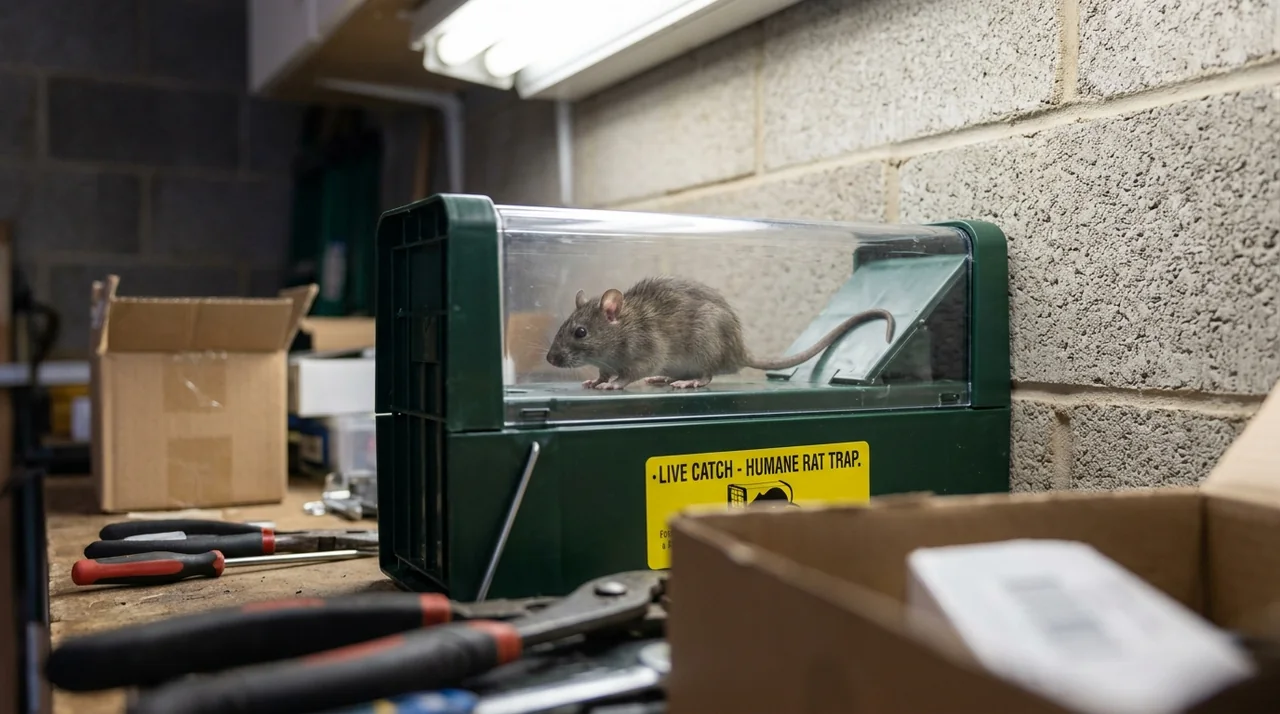


Humane rat traps are designed to capture a rat alive and unharmed so it can be released, appealing to households that want to avoid killing rodents. They can work, but "humane" carries real responsibilities and some genuine limitations, so this guide covers the main types, how to choose, and how to use one ethically, alongside the trap-comparison companion in this section.
Types of Live-Capture Traps
Humane rat traps share a basic principle, lure the rat into an enclosure and close the exit, but differ in design:
- Single-catch cage or box traps have a door that shuts once a rat enters and steps on a treadle or takes the bait. These are the most common and let you see the captured animal clearly.
- Multi-catch traps can hold several rodents, useful where activity is high, though more often used for mice than rats.
- Metal or sturdy-plastic enclosures matter for rats specifically, since a rat can chew through flimsy plastic; look for robust construction and adequate ventilation.
The Responsibilities of Humane Trapping
Choosing live capture means committing to doing it right, or the "humane" label is meaningless:
- Check traps very frequently, at least daily and ideally more often. A trapped rat can suffer or die from stress, dehydration, temperature, or exhaustion if left too long, which defeats the entire purpose.
- Release promptly and appropriately. Be aware that relocating a rat far from where it was caught often leads to its death anyway, as it struggles to find food, water, and shelter in unfamiliar territory, and it can simply become another property's problem. Some areas also have laws or guidance restricting relocation of wildlife, so check local rules.
- Handle safely: rats can bite and carry disease. Wear gloves, avoid direct contact, and never handle a wild rat with bare hands.
Make Trapping Work
Placement and patience determine success more than the trap brand:
- Set traps against walls along runways marked by droppings and grease trails, where rats travel.
- Rats are cautious of new objects, so you may need to leave the trap baited and unset (or propped open) for several days until they feed comfortably, then arm it.
- Bait with something attractive, such as peanut butter, nuts, or dried fruit.
- Pair trapping with exclusion and sanitation, sealing gaps with metal, storing food airtight, so new rats do not replace the ones you remove.
Wash your hands after handling traps, and avoid stirring up dust from droppings. If someone is bitten by a rat, contact a healthcare provider; for any accidental exposure to a rodent-control product, call Poison Control at 1-800-222-1222.


