Hide Beetle
Dermestes maculatus · also called hide beetles, leather beetle, skin beetle
Quick answer
The hide beetle (Dermestes maculatus) is a dark, oval dermestid beetle that feeds on dried animal matter: hides, leather, dried meat, feathers, and carcasses. Hairy larvae do the damage and bore into wood or insulation to pupate. It infests homes, pantries, and museums but does not bite or spread disease.
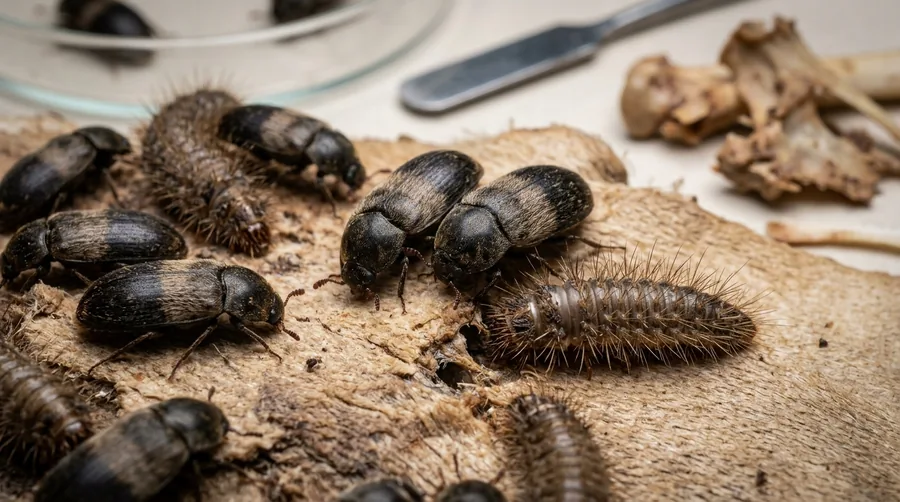
Dark oval hide beetle and a hairy dermestid larva on a piece of dried animal hide
Recommended Products


What it does
Hide beetles scavenge on dried, high-protein animal material. The hairy larvae do most of the feeding and, when ready to pupate, bore into firm materials like wood, insulation, cork, and even soft metals, which is where much of the structural nuisance comes from. Adults fly and can move between food sources, dead animals, and stored goods.
Where it lives
They infest anywhere dried animal products accumulate: pantries with dried meat or pet food, closets with leather and furs, attics or walls holding a dead rodent or bird, plus taxidermy, museum specimens, and food-processing plants. They occur nationwide in homes and commercial settings and often trace back to a hidden carcass.
How it breeds
Females lay eggs on or near a suitable food source. Larvae feed and molt through several stages over weeks to months depending on temperature and food, then seek a firm material to bore into and pupate. Several generations can occur per year indoors where conditions and food remain available.
What it eats
Larvae and adults feed on dried animal matter: skins, hides, leather, fur, feathers, dried meat and fish, cheese, bone, and high-protein pet food. A concealed dead rodent or bird in a wall or attic is a very common hidden food source.
Identification
Adults are oval, about 6-10 mm, mostly black, some species with pale markings underneath. Larvae are the more telling stage: elongated, brown, and densely covered in stiff bristly hairs, up to about 12 mm, tapering toward the rear. Shed larval skins near infested goods are a frequent clue.
Signs of an infestation
- Hairy, bristly larvae near dried meat, hides, or pet food
- Shed larval skins accumulating in cupboards or closets
- Damaged leather, furs, feathers, or dried food
- Small bore holes in wood or insulation near infested items
- Beetles or larvae appearing after a rodent or bird dies in a wall
Prevention tips
- Locate and remove any hidden dead animals in walls, attics, or chimneys
- Store dried meat, pet food, and grains in airtight containers
- Protect leather, furs, and feathers and clean them before storage
- Vacuum closets, pantries, and baseboards to remove larvae and skins
- Screen vents and seal gaps to keep birds and rodents out
Professional solutions
For persistent or widespread infestations, or when the food source cannot be found, a pest professional can locate hidden carcasses and treat harborage with EPA-registered products. Museums and food facilities often need specialized management. The key step is always finding and removing the animal-based food source; treatment without that only manages symptoms.
Health & safety
Hide beetles do not bite people or transmit disease. The bristly larval hairs can cause minor skin or respiratory irritation in sensitive individuals handling heavy infestations. The main harm is material damage: ruined leather, furs, dried foods, and specimens, plus larvae boring into wood and insulation as they pupate.
Relevant Products


Frequently asked questions
Where are hide beetles coming from in my house?
Very often a hidden dead animal, a rodent in a wall, a bird in a chimney, or an attic carcass, is the food source. They also breed in dried meat, pet food, leather, and furs. Finding and removing that animal-based source is the essential step to stopping them.
Do hide beetles damage the house?
The larvae can. As they prepare to pupate, they bore into wood, insulation, cork, and other firm materials, and they destroy leather, furs, feathers, and stored dried foods. They do not bite people or spread disease, so the concern is material damage, not health.
Fact-checked by Morgan Vance, Editorial Director (editorial review, not a professional pest-control or medical sign-off). Last reviewed May 19, 2026. We correct anything a reader shows us is wrong — see our corrections policy.